IEA releases largest-ever strategic petroleum reserve: new landscape for global energy market
Keywords
IEA, strategic petroleum reserve, oil release, energy security, geopolitics, global oil prices
Introduction
On July 15, 2026, the International Energy Agency (IEA) issued a statement announcing that all 32 member countries, including G7 members, had unanimously voted to release a total of 400 million barrels of strategic petroleum reserves. This figure not only sets a historical record since the IEA's establishment, but also far exceeds the 182 million barrels released in two installments in 2022 after the Russia-Ukraine war. Against the backdrop of ongoing volatility in the global energy landscape and escalating geopolitical risks, this unprecedented move has drawn widespread attention and in-depth discussion from the international community.
Is this a temporary measure to address short-term oil price pressures, or a strategic turning point reshaping the global energy security architecture? What underlying supply-demand contradictions and great power rivalries does it reflect? This article analyzes the background, mechanisms, impacts, and future outlook of this large-scale release.
1. Unprecedented release scale: background and motivations
1.1 Continued pressure on global oil market
Since the outbreak of the Russia-Ukraine conflict in 2022, the global energy market has entered a period of high uncertainty. Although oil prices experienced periodic declines between 2023 and 2025, structural contradictions have not been fundamentally resolved. Restricted Russian oil exports, stricter OPEC+ production cut enforcement, insufficient global refining capacity, and political instability in some oil-producing countries have collectively contributed to persistent supply-side tensions.
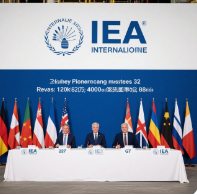
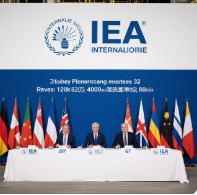
The above diagram clearly shows the member country distribution and coordination mechanism involved in this release plan, highlighting the IEA's rapid response capability in emergency situations.
1.2 Dual pressures from demand side and geopolitics
Entering 2026, the global economic recovery has accelerated, especially in the Asia-Pacific region and emerging market countries, where oil demand has risen significantly. At the same time, tensions have reignited in the Middle East—the Iran nuclear issue negotiations are deadlocked, the spillover effects of the Israeli-Palestinian conflict are intensifying, and risks in Red Sea shipping are rising. These factors combined have driven international oil prices to surge over 30% in the first half of 2026, breaking through the psychological threshold of $120 per barrel.
Against this backdrop, IEA member countries decided to take unprecedented collective action to stabilize oil prices, prevent economic overheating, and maintain energy security. Compared to the 182 million barrels released in two phases in 2022, the 400 million barrel scale this time shows the member countries' serious concern about the risk of market disorder.
1.3 Mechanism and rules of strategic petroleum reserve release
The IEA's strategic petroleum reserve release mechanism is based on the Agreement on an International Energy Program, requiring member countries to hold oil reserves equivalent to at least 90 days of net imports. In the event of a "major supply disruption," the IEA can initiate a coordinated release. Of the 400 million barrels released this time, about 60% comes from the U.S. Strategic Petroleum Reserve (SPR), with the rest shared by European countries, Japan, South Korea, and other members. This scale is equivalent to about 4% of global daily consumption and can significantly impact the market in the short term.
2. Continuation of the Russia-Ukraine war and energy crisis: comparative analysis with the 2022 release
2.1 Scale comparison: a leap from 182 million to 400 million
After the outbreak of the Russia-Ukraine war in 2022, the IEA announced two releases of strategic reserves: first in March with 120 million barrels (including 60 million from the U.S.), and second in April with 62 million barrels, totaling 182 million barrels. At that time, this scale set a historical record, but now the 400 million barrel release is more than double that, marking a significant increase in the international community's ability and determination to respond to the energy crisis.
2.2 Contextual differences: from emergency response to systemic intervention
The 2022 release was more about responding to sudden panic and short-term supply gaps caused by the Russia-Ukraine conflict, while this release is a systemic intervention under the superposition of long-term structural tensions and geopolitical risks. Over the past four years, insufficient global upstream investment, frequent energy transition pains, and increased supply chain fragmentation have made governments realize that energy security has evolved from a short-term issue to a medium-to-long-term strategic challenge.
2.3 Changes in release pace and method
In 2022, the IEA adopted a phased release strategy to observe market reactions before making decisions. In contrast, this release adopts a one-time large-scale concentrated approach, explicitly setting the release period as "until market stability," with a more decisive pace and stronger signal. This indicates that member countries have reached a high degree of consensus on policy coordination, avoiding the lag in action caused by internal bargaining seen in the past.
3. Mechanism and impacts of strategic petroleum reserve release
3.1 Short-term market reaction: stabilizing oil prices and alleviating panic
From historical experience, a large-scale strategic petroleum reserve release can quickly depress international oil prices in the short term. For example, in 2022, after the announcement of the first release, Brent crude oil futures prices fell over 15% within two weeks. The 400 million barrel volume this time is expected to have an even more significant suppressing effect on the market. At the same time, the release plan sends a clear signal to speculative capital—major consuming countries have the ability and willingness to intervene strongly in the market, thereby reducing irrational speculation.
3.2 Medium-to-long-term issues: reserve replenishment and sustainability
However, replenishing reserves after a large-scale release is a major challenge. The U.S. Strategic Petroleum Reserve fell to its lowest level in nearly 40 years after the 2022 release, only gradually recovering to about 350 million barrels by the end of 2025. After this release, member countries will face enormous replenishment pressure. If OPEC+ or Russia takes advantage of this window to increase export cuts, it could actually push oil prices up during the replenishment phase, creating a vicious cycle of "release-replenish-release again."
3.3 Far-reaching impacts on global energy landscape
First, this IEA action further strengthens its role as a coordinator of energy policies for developed countries, somewhat weakening OPEC+'s monopoly over international oil prices. Second, it may accelerate the restructuring of global energy supply chains—countries highly dependent on Russian energy will more actively seek alternative sources, boosting production from non-OPEC oil-producing countries (e.g., U.S., Canada, Brazil). Finally, the large-scale release may prompt countries to reassess the scale and activation rules of strategic petroleum reserves, promoting the establishment of more flexible and regular intervention mechanisms.
4. Outlook and challenges: new paradigm of energy security
4.1 New role of strategic reserves under energy transition
Against the backdrop of accelerating global clean energy transition, the function of strategic petroleum reserves is changing. In the past, reserves were only used to address short-term supply disruptions caused by war or natural disasters; now, they are frequently used to smooth cyclical price fluctuations, curb speculation, and respond to "gray zone" geopolitical conflicts (e.g., sanctions, shipping blockades). This functional expansion is driven by real pressures and reflects a deepening concept of energy security.
4.2 Interest divergences and coordination challenges among member countries
Although all 32 countries voted in favor this time, internal unity is not absolute. European countries, due to soaring energy costs from the Ukraine crisis, are the most active in supporting the release; while Asian countries like Japan and South Korea are more concerned about the cost pressure of replenishing inventories. Additionally, as the largest contributor, the impact of the U.S. domestic political cycle (midterm elections in 2026) on the release decision cannot be ignored. Balancing the interests of different countries during the subsequent replenishment phase will be a major test for the IEA.
4.3 Spillover effects on emerging markets and developing countries
The main beneficiaries of the IEA reserve release are the member countries themselves, but the decline in global oil prices will indirectly alleviate imported inflation pressures in emerging market countries. However, some analysts point out that the release could depress oil prices, reducing the incentive for OPEC+ members to cut production, potentially leading them to reverse policies after the release ends, causing sharp volatility. Developing countries need to be wary of the impact of such "roller-coaster" oil price movements on their fiscal and trade balances.
4.4 Reform directions of global energy governance mechanisms
This large-scale release once again highlights the limitations of existing global energy governance mechanisms in addressing systemic crises. The IEA only covers developed countries, leaving major consumers like China and India outside its framework. In the future, calls for establishing a more inclusive "Global Energy Security Alliance" or "Multilateral Emergency Reserve Sharing Mechanism" may significantly increase. At the same time, institutions like the International Monetary Fund (IMF) and the World Bank may also be called upon to participate in building energy market stability mechanisms.
Conclusion
The IEA's largest-ever release of 400 million barrels of strategic petroleum reserves is both a powerful response to the current complex energy crisis and a key experiment in energy security governance in the context of globalization. In the short term, it helps stabilize market expectations and curb overheated oil prices, but in the long run, reserve releases cannot replace structural reforms on the supply side. The "new normal" shaped by multiple factors—energy transition, geopolitical restructuring, growing demand from emerging markets—requires governments, international organizations, and market participants to jointly explore more resilient and forward-looking energy governance solutions.
The release of 400 million barrels is an emergency measure of the old order and a signal for the opening of a new order. As oil transitions from "black blood" to a "transition fuel," the international community must face a fundamental question: during the "window period" when the fossil fuel era is waning and the new energy system is not yet mature, how can a smooth transition and universal security of global energy be ensured? The answer to this question may be even more important than the 400 million barrels of oil itself.