Home
Energy Finance
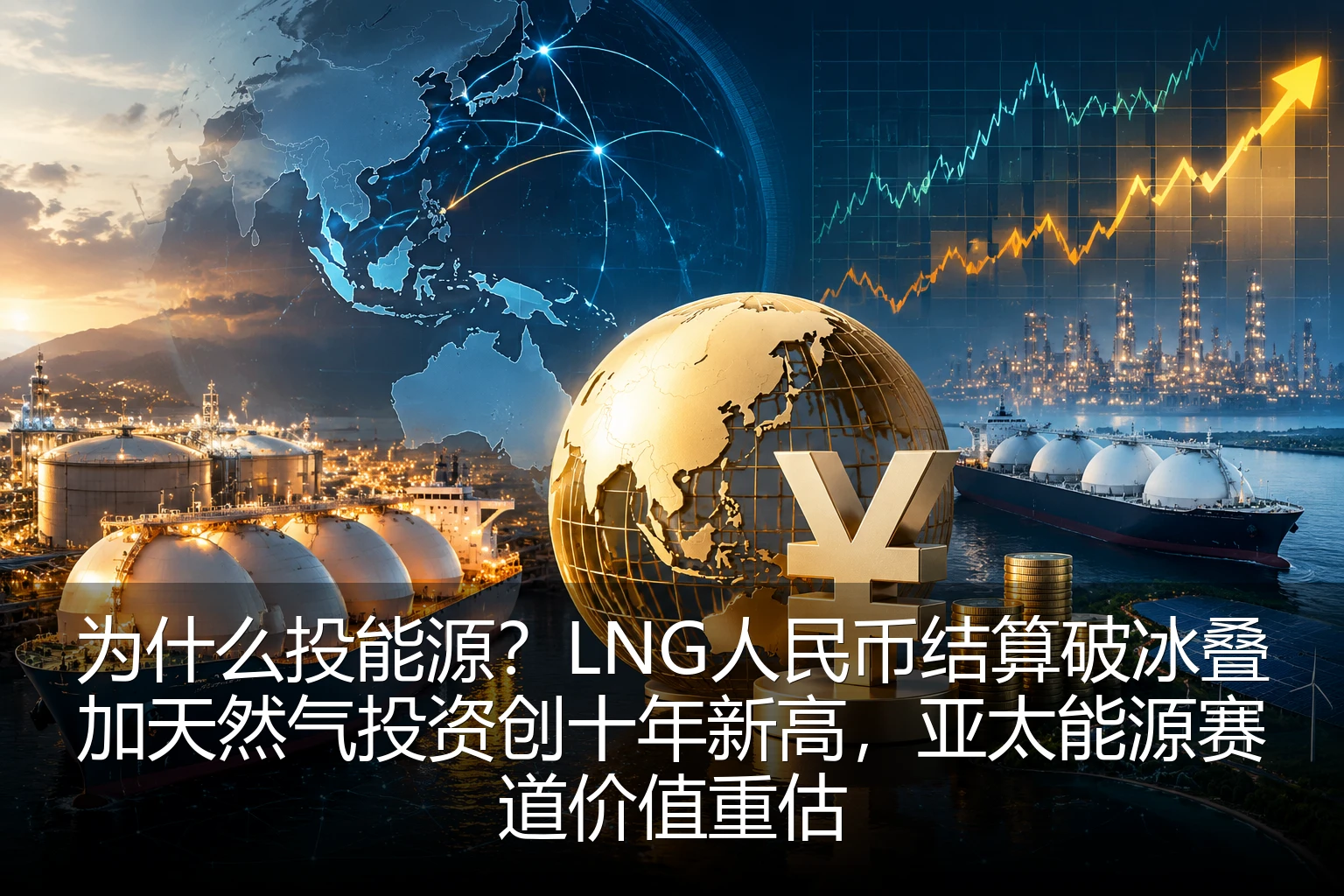
Why Invest in Energy? LNG RMB Settlement Breakthrough and Natural Gas Investment Hit Ten-Year High, Revaluation of the Asia-Pacific Energy Sector
Why Invest in Energy? LNG RMB Settlement Breakthrough and Natural Gas Investment Hit Ten-Year High, Revaluation of the Asia-Pacific Energy Sector
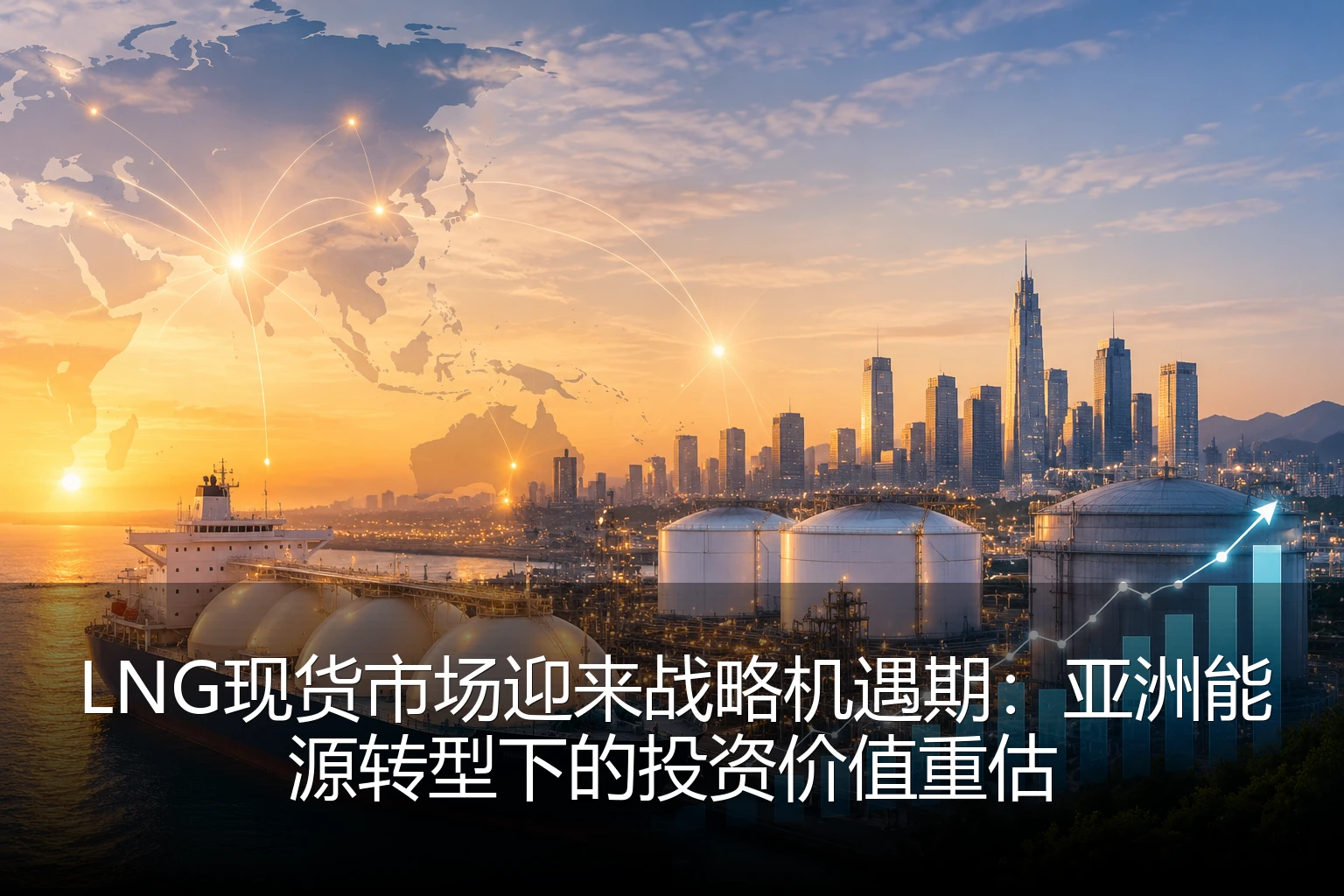
In August 2026, the first LNG "Cross-border Payment" RMB settlement transaction was completed, compressing the settlement cycle from several days to minutes; concurrently, IEA data shows that global gas investment is expected to reach $330 billion in 2026, a ten-year high, while oil investment has declined for three consecutive years. Asian JKM gas prices are approaching their annual highs, and the combination of supply-demand gaps, energy security, and AI power demands is elevating natural gas
This article is for informational purposes only and does not constitute investment advice. Precious metals trading involves risks, please make decisions carefully.
In the Asia-Pacific energy market of August 2026, two seemingly independent yet fundamentally related major events are unfolding: On one hand, the first LNG "Cross-border Connect" RMB settlement transaction has been successfully implemented through the synergy of financial infrastructure in Shanghai and Hong Kong, compressing the cross-border settlement cycle from "days" to "minutes." On the other hand, the International Energy Agency (IEA) report indicates that global natural gas investment is expected to reach $330 billion in 2026, a ten-year high, while upstream oil investment has declined for the third consecutive year. These two threads are interwoven, painting a picture of a structural revaluation in Asia-Pacific energy investment—natural gas is ascending from a "transitional fuel" to a "strategic asset," and its configuration value is being repriced.
Settlement Revolution: RMB "Cross-border Connect" Accelerates LNG Trade
According to an announcement by ICBC Asia on August 5, the bank recently collaborated with the Shanghai branch of Industrial and Commercial Bank of China to assist CNOOC International Trade Co., Ltd., a wholly-owned subsidiary of CNOOC, in the first pilot transaction of the liquefied natural gas "Cross-border Connect" product using RMB settlement. In this transaction, ICBC Asia was responsible for overseas fund clearing, while the Shanghai branch of ICBC utilized its onshore advantage to complete the collection of RMB funds domestically, drastically reducing the entire settlement cycle from the previous several days to the minute level.
The significance of this breakthrough extends far beyond mere speed. For a long time, China's LNG import trade was priced and settled in USD, while domestic sales were priced in RMB. This currency mismatch on both the buying and selling sides exposed importing enterprises to long-term foreign exchange risk; and after geopolitical conflicts exacerbated currency fluctuations, foreign exchange costs became an invisible killer squeezing trade profits. The seamless integration of RMB settlement has eliminated this pain point at the mechanism level, and it has provided a real-world test for the synergistic effect of the two major international financial centers, Hong Kong and Shanghai, setting a new benchmark for cross-border financial innovation in the energy sector.
In fact, the "Cross-border Connect" product was jointly launched by CNOOC and the Shanghai Oil and Gas Trading Center, completing its first round of pilot transactions as early as June 26, with participation from multiple municipal gas enterprises. The implementation of RMB settlement in this instance completes the "last mile" of clearing and settlement beyond transaction matching, enabling LNG trade to move from offline negotiations to a complete closed loop of "online bidding and RMB delivery," and it provides financial infrastructure support for "China prices" to participate in international natural gas pricing.
Investment Flow Map: Natural Gas Hits Ten-Year High, Oil Declines for the Third Straight Year
Mirroring the technical breakthrough in settlement, the structural changes in investment are equally dramatic. The IEA's "World Energy Investment 2026" report, released at the end of May, shows that despite geopolitical conflicts in the Middle East disturbing the global energy landscape, total global energy investment in 2026 is still expected to grow by about 5% year-on-year, reaching $3.4 trillion. Of this, approximately $2.2 trillion flows to renewable energy, grid, energy storage, and low-carbon fuels, while about $1.2 trillion is invested in oil, natural gas, and coal.
What is most noteworthy is natural gas: global natural gas project investment is expected to grow by over 10% in 2026, reaching $330 billion, the highest level in nearly a decade. The expansion of a new round of LNG export projects in the United States is the main driver, and the continuous strengthening of energy security strategies in European and Asian countries has kept global demand for LNG on the rise. In sharp contrast, upstream oil investment is set to decline for the third consecutive year, falling below $500 billion—capital is voting with its feet, and natural gas is replacing oil as the top priority in traditional energy investment. Meanwhile, power assets continue to attract global capital: grid investment is expected to approach $550 billion, a year-on-year increase of nearly 20%; battery energy storage investment has surpassed $100 billion for the first time; renewable energy investment is about $665 billion, with solar energy alone accounting for $365 billion, equivalent to $1 billion flowing into photovoltaics daily. Nuclear power is also recovering, with 15 countries launching construction of 78GW new units, with a total investment exceeding $80 billion.
Gas prices are strong: supply-demand gaps back the investment logic
The strength of the fundamentals is evidenced by the prices. On July 30, 2026, Asian JKM spot gas prices rose to $21.38/Mtoe, a 33.18% increase month-on-month, just short of the year's high on March 19; European TTF gas prices also rose to $19.61/Mtoe. Morgan Stanley further predicts that with high summer electricity demand and the European restocking cycle, Asian LNG spot prices in the second half of 2026 may surge to $25/Mtoe, setting a three-and-a-half-year high.
The deep reason for high gas prices is the supply-demand gap. The energy consumed in Asia is equivalent to the sum of other global regions, but local production can only meet about one-third of the demand. IEA data shows that Asian energy consumption has grown by about 50% over the past decade, while traditional energy supply chain investment has fallen to low levels. Coupled with the surge in electricity demand from the AI computing boom—Morgan Stanley estimates that power consumption in Asia-Pacific data centers will exceed 100 GW by 2030—natural gas, as a peaking power source with both flexibility and low-carbon attributes, is being revalued for its strategic importance. Gas prices have shown greater elasticity and resilience compared to crude oil after the US-Iran conflict, which also confirms the shift in the capital hedging logic.
Why invest in energy? Three logics support long-term allocation
Overall, the investment in natural gas, and even broader energy, in Asia-Pacific is driven by three logics:
Energy security premium. Geopolitical conflicts repeatedly remind Asian countries that the risk of over-relying on a single import source is unacceptable, making gas source diversification and infrastructure self-sufficiency a policy focus, directly translating into deterministic capital expenditure in upstream exploration, LNG receiving terminals, and storage facilities.
Rigid demand growth. AI computing, data centers, and manufacturing relocation are collectively boosting electricity demand, making natural gas, the grid, and energy storage a "reliable power triangle," where any gap amplifies investment return expectations.
Financial infrastructure upgrade. Innovations such as RMB settlement and exchange bidding have reduced transaction friction and exchange rate risk, evolving natural gas from a "commodity" into a financial asset that can be priced, hedged, and allocated, attracting continuous institutional capital.
For investors, the natural gas sector can be deployed along three main lines: first, gas-source companies with upstream resources and long-term contract cost advantages directly benefit from the rising gas price cycle; second, LNG receiving, storage, and terminal distribution segments benefit from improved infrastructure utilization and turnover efficiency; and third, energy storage and grid flexibility upgrades complementary to natural gas share the systemic benefits of the "power triangle." Of course, the cyclical fluctuations in gas prices, geopolitical uncertainties, and the long-term constraints of energy transition remain risk variables that require continuous monitoring during allocation. From the first RMB settlement to the decade-high capital expenditure, and the Asian gas price nearing an all-time high, the Asia-Pacific energy market in August 2026 is sending a series of signals to investors: the revaluation of natural gas investment may have only just begun.
Article Tags
Related Articles