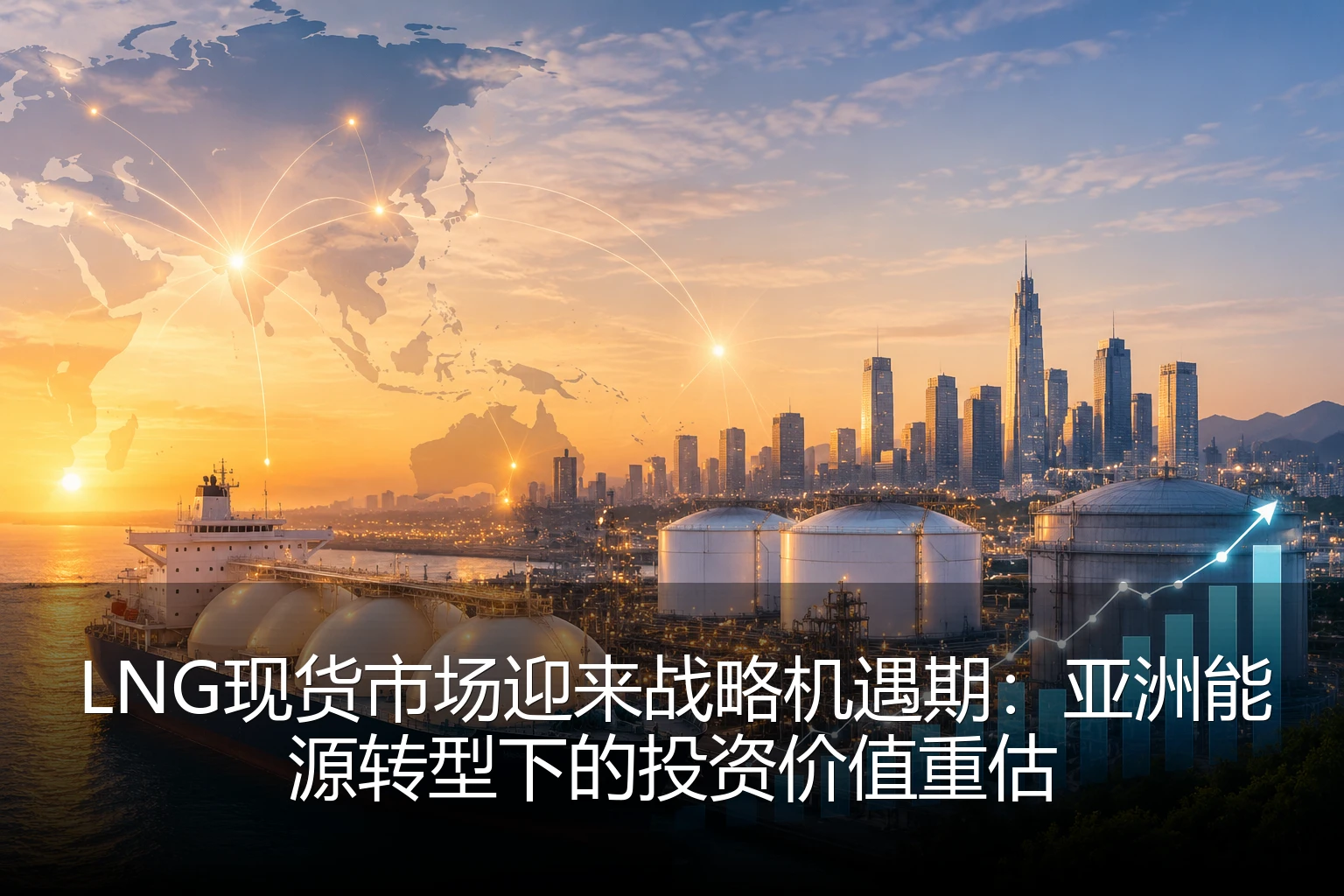

July 27, 2026, Singapore — At the Asia-Pacific Energy Investment Forum opening today at Marina Bay Sands, the International Energy Agency (IEA) released its latest report showing that in H1 2026, total green energy investment in Asia-Pacific exceeded $180 billion, up 35% year-on-year, a record high for the same period. This figure far exceeds the global average, marking the Asia-Pacific as the core engine of global energy transition.
Investment Heat Rises Across the Board: Solar and Storage Lead
The report notes that in H1 2026, investment in solar PV in the Asia-Pacific region reached $68 billion, up 42% year-on-year, driven mainly by accelerated large-scale ground-mounted projects in China, India, and Vietnam. Offshore wind investment also performed strongly, reaching $32 billion, up 28% year-on-year, with floating wind projects in Japan, South Korea, and Taiwan region becoming new growth points. Energy storage system investment grew fastest, up 55% year-on-year to $21 billion, driven by urgent needs for grid flexibility and renewable energy absorption in various countries.
"The Asia-Pacific is experiencing a silent energy revolution," said IEA Energy Investment Analyst Wang Lin in a keynote speech. "Policy certainty, technological progress, and capital inflow form a positive cycle. In particular, the accelerated implementation of China's 14th Five-Year Plan for Renewable Energy and the successive Nationally Determined Contributions (NDCs) proposed by India and Southeast Asian countries provide clear long-term signals for investors."
Three Drivers: Policy, Cost, and Global Layout
Behind the investment boom are multiple factors resonating. First, at the policy level: in H1 2026, Asia-Pacific countries intensively launched green energy stimulus measures. Indonesia enacted the New Energy Law in April, opening geothermal and solar development permits to foreign investment; Thailand launched a "Green Electricity Certificate" trading platform to attract international capital; Australia announced raising its 2030 renewable energy target from 50% to 65% and added $3 billion AUD for grid upgrades.
Second, costs continue to decline. According to BloombergNEF (BNEF) data, in 2026, the levelized cost of electricity (LCOE) for large-scale ground-mounted solar in Asia-Pacific has fallen to $0.025\/kWh, down 40% from 2020, reaching parity with or below fossil fuels. This has greatly improved project economics, attracting long-term capital such as pension funds and insurance funds.
Third, global supply chain restructuring brings Asia-Pacific manufacturing advantages. For example, in solar modules, Asia-Pacific production capacity accounted for 85% of the global total in H1 2026, with Chinese head companies LONGi Green Energy and JinkoSolar starting operations at new factories in Vietnam, Malaysia, and Indonesia, forming a vertically integrated layout. Meanwhile, India is vigorously supporting domestic battery manufacturing through its Production-Linked Incentive (PLI) scheme, aiming to build an independent supply chain.
Hot Investment Tracks: Offshore Wind and Hydrogen Future
Although solar and storage dominate, many forum guests believe that offshore wind and green hydrogen will become the next investment feng shui areas. The Japanese government announced earlier this month that it will build 10 floating offshore wind farms by 2030, with a total investment of about $20 billion; South Korea has teamed up with Danish Ørsted to launch the world's largest floating wind project, expected to be grid-connected by 2028. For green hydrogen, Australia, Saudi Arabia (though not in Asia-Pacific, its projects involve Asia-Pacific exports) and China are racing to build electrolyzer factories. By end-2026, Asia-Pacific electrolyzer capacity is expected to reach 15 GW, accounting for 60% of the global total.
"We are seeing a shift from 'investing in renewable energy assets' to 'investing in energy technologies'," said Chen Zhiqiang, head of infrastructure investment at Singapore sovereign fund GIC, in a roundtable discussion. "Digital grids, virtual power plants, carbon capture and utilization, and other new technologies are creating new asset classes. Though these areas are riskier, potential returns may exceed those of traditional energy projects."
Risk Alert: Geopolitics and Grid Bottlenecks
However, investment is not without shadows. The IEA report warns that aging grid infrastructure in the Asia-Pacific is a key bottleneck constraining further renewable energy development. Grid absorption capacity in countries like India and Vietnam is insufficient, leading to curtailment of wind and solar in some areas. In addition, geopolitical uncertainties—such as the South China Sea situation and US-China trade frictions—may affect financing and construction progress of cross-border energy projects.
"Investors need more refined risk assessment," noted Li Wei, Asia-Pacific Research Director at energy consultancy Wood Mackenzie. "Simply betting on a single track may face policy adjustment risks. It is recommended to adopt a 'core + satellite' strategy, with mature solar projects as the core, supplemented by storage, offshore wind, and hydrogen frontier areas, while focusing on early layout opportunities in emerging markets such as Southeast Asia and South Asia."
Outlook for H2: Capital May Accelerate Inflow
Looking at H2 2026, multiple institutions predict that Asia-Pacific green energy investment will hit new highs. Citibank recently raised its full-year forecast to $400 billion, believing that several large projects will reach financial close in H2, including China Three Gorges Corporation's 2 GW offshore wind project, India's Adani Group's 5 GW solar park, and Australia's Sun Cable solar-storage cross-border transmission project.
"Energy transition is not a linear process but an exponential leap," Wang Lin emphasized in her speech. "The Asia-Pacific region is at the tipping point of this leap. For investors, it's not whether to enter, but how to enter smarter."
The forum will run for three days, expecting over 2,000 government representatives, corporate executives, and investors, during which multiple cooperation initiatives and investment guides will be released.