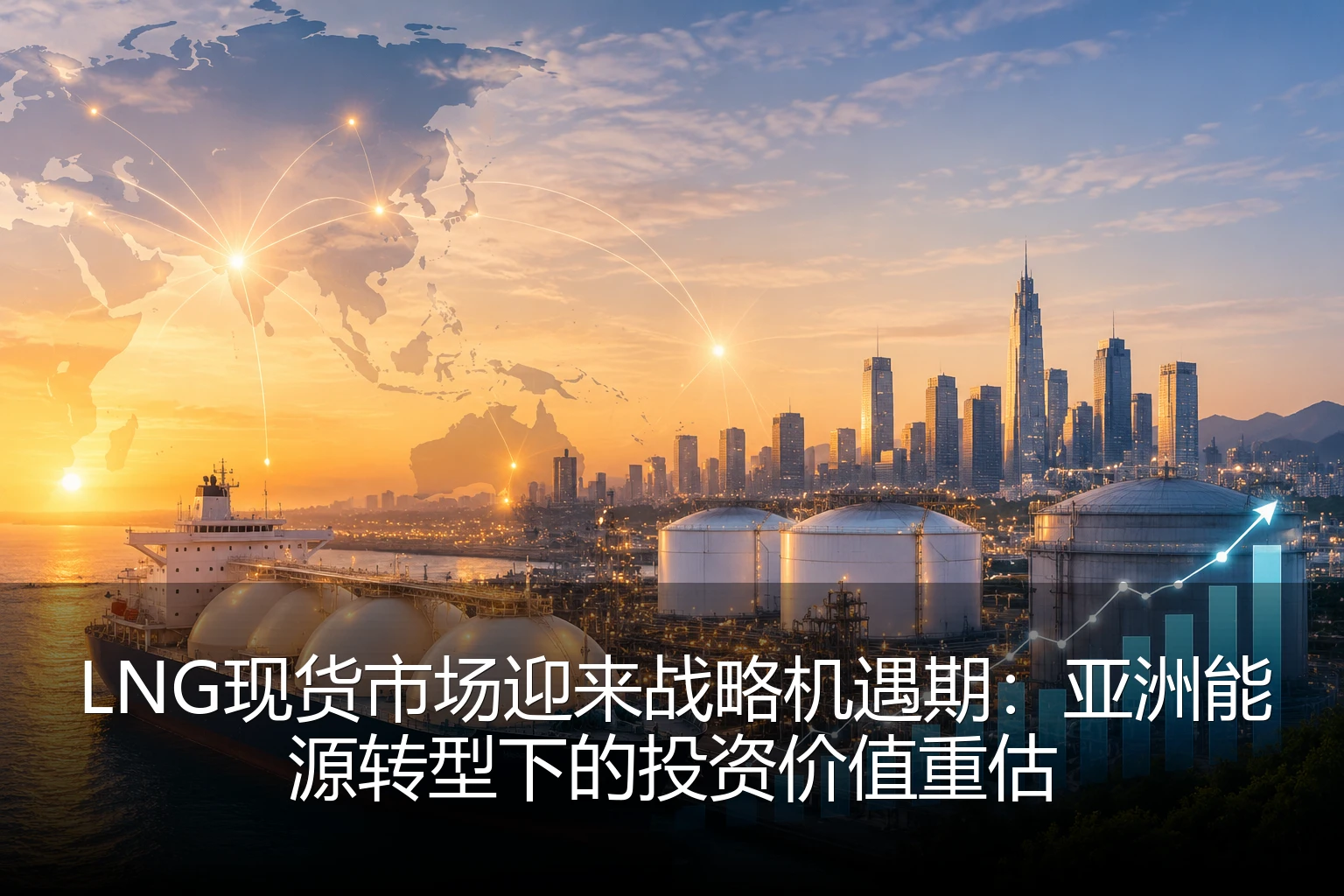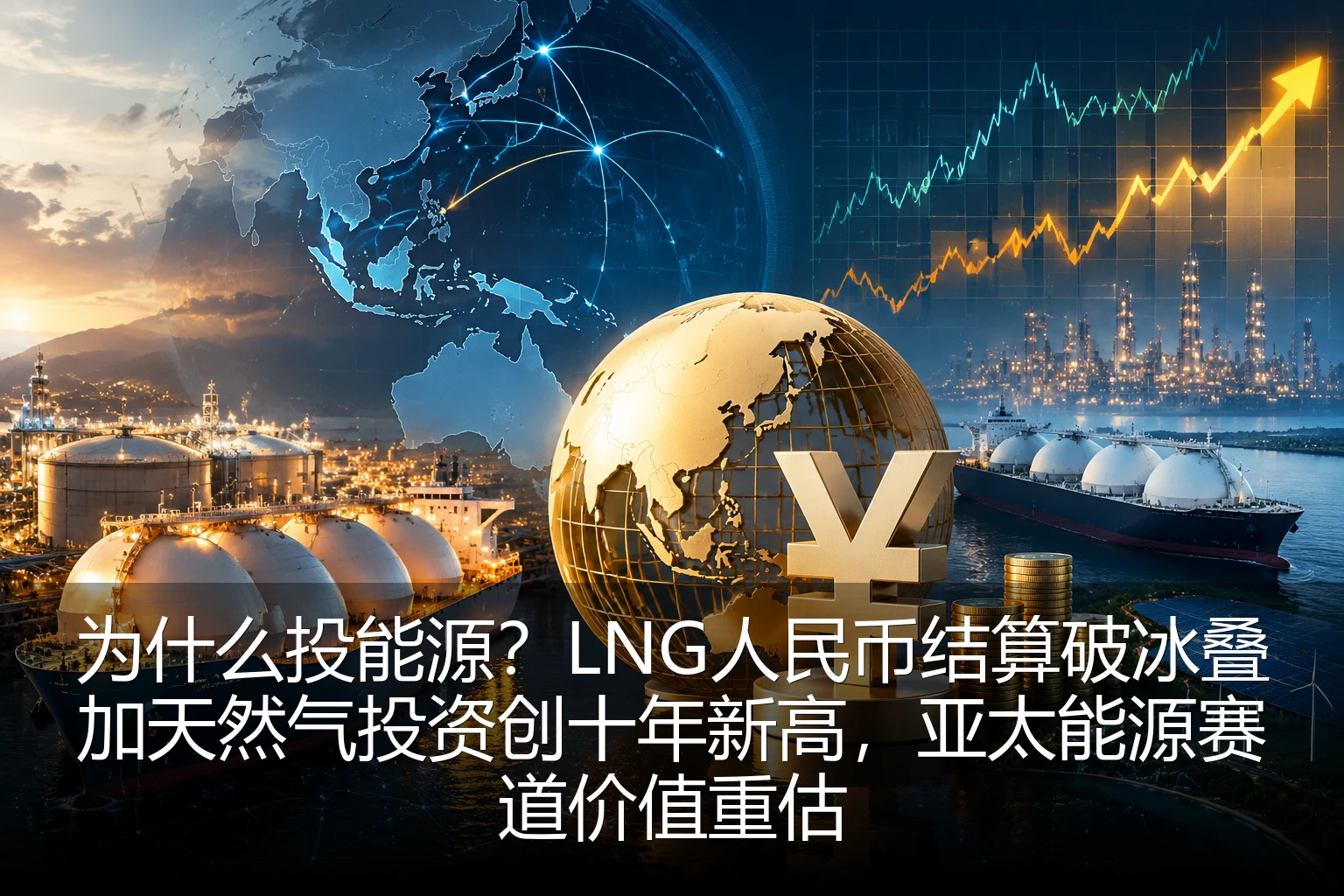

Amidst the profound reshaping of the global energy landscape, the Asia-Pacific region stands at the starting point of a super-cycle in energy investment. While market attention is drawn to new energy sectors like solar and wind power, a more certain and higher-return investment area—natural gas—is quietly emerging. The latest data from August 2026 shows that Asian LNG spot prices have surpassed $12/MMBtu, hitting a near two-year high, and this upward trend is far from over. For investors seeking long-term, stable growth, Asia-Pacific natural gas investment is entering a rare 'Golden Decade'.
Supply-Demand Imbalance: The Fundamental Logic of Natural Gas Investment
The Asia-Pacific region is the core engine of global natural gas demand growth. According to the latest report released by the International Energy Agency (IEA) in July 2026, natural gas demand in the Asia-Pacific region reached 920 billion cubic meters in 2025 and is projected to exceed 1.1 trillion cubic meters by 2030, with an average annual growth rate exceeding 3.5%. This growth rate far surpasses the global average, driven by three structural factors:
Economic Growth and Industrialization Demand
Southeast Asian nations like Vietnam, Indonesia, and the Philippines are in an accelerated industrialization phase, where manufacturing expansion drives surging electricity demand. Natural gas, as a clean and efficient power generation fuel, is progressively replacing coal as the mainstay for new capacity additions. In the first half of 2026, Vietnam's newly added natural gas power generation capacity reached 4.2 GW, a year-on-year increase of 67%.
The 'Bridge Fuel' Role in Energy Transition
Against the backdrop of Asia-Pacific countries setting carbon neutrality targets, natural gas is widely regarded as the 'bridge fuel' for transitioning from coal to renewable energy. Countries like Japan and South Korea, facing obstacles in restarting nuclear power plants, have significantly increased LNG imports to ensure electricity supply security. From January to July 2026, Japan's LNG imports grew by 12% year-on-year, and South Korea's by 9%.
Explosive Growth of AI and Data Centers
The explosive growth of artificial intelligence and cloud computing industries is generating unprecedented electricity demand. Global data center electricity consumption is expected to reach 450 TWh in 2026, with the Asia-Pacific region accounting for over 40%. Natural gas, with its stability and dispatchability, becomes the preferred choice for data center backup and baseload power. Industry estimates suggest that every additional 1 GW of AI computing power will drive approximately 1.5 billion cubic meters of additional annual natural gas demand.
Supply Bottlenecks: The Key to Locking in Long-Term Premiums
In stark contrast to robust demand growth, natural gas supply in the Asia-Pacific region faces multiple bottlenecks. Global LNG capacity additions are limited in 2026, with major new projects concentrated in Qatar, the US, and Mozambique, but their commissioning is generally delayed to 2027-2028. This means the Asia-Pacific LNG market will remain tight over the next two years, with the price center likely to continue shifting upward.
Underinvestment in Upstream
Despite the promising demand outlook, global upstream natural gas exploration and development investment has been severely insufficient over the past five years. From 2020 to 2025, global natural gas capital expenditure declined by an average of about 8% annually, primarily due to policy uncertainties brought by the energy transition. This has led to a sharp reduction in the number of new projects that can come online between 2026 and 2028, further widening the supply-demand gap.
Intensified Geopolitical Risks
With ongoing tensions in the Middle East and navigation safety risks in the Strait of Hormuz, Asia-Pacific buyers are accelerating efforts to seek diversified supply sources. Australia, Qatar, and the US are the main beneficiaries. However, Australian LNG projects are constrained by labor shortages and rising costs, limiting capacity expansion; US LNG export projects face challenges from lengthy approval and construction cycles. Supply-side uncertainties have caused long-term LNG contract prices to surge significantly, with newly signed contracts of 10 years or more in 2026 generally priced at $10-12/MMBtu, doubling from 2020 levels.
Policy Incentives: Governments Strongly Support Natural Gas Investment
Asia-Pacific governments are creating a favorable environment for natural gas investment through policy tools. In its 'Basic Energy Plan' released in April 2026, Japan's Ministry of Economy, Trade and Industry positioned natural gas as 'the core fuel for ensuring energy security' and plans to add 10 new LNG receiving terminals before 2030. The South Korean government launched an 'LNG Hub Strategy' aiming to transform the country into a Northeast Asian LNG trading and transshipment center.
Southeast Asian nations are even more actively attracting foreign investment to participate in natural gas infrastructure construction. The Indonesian government announced in July 2026 that it would simplify the approval process for LNG terminal and pipeline projects and provide tax incentives. Vietnam plans to invest over $20 billion in natural gas power generation and LNG receiving terminal construction between 2026 and 2030. These policy incentives provide investors with clear entry windows and exit guarantees.
Investment Returns: Combining Stability and High Growth
From an investment return perspective, natural gas assets exhibit dual characteristics of 'stability + high growth'. On one hand, long-term LNG contracts typically adopt 'take-or-pay' clauses, ensuring stable and predictable cash flow. In the first half of 2026, major Asia-Pacific LNG producers like Woodside and Cheniere Energy reported net profit margins exceeding 25%, far higher than traditional energy projects. On the other hand, as spot market volatility intensifies, flexible arbitrage opportunities expand, allowing investors with trading capabilities to capture excess returns through cross-regional price spreads.
Taking data from August 7, 2026, as an example, the Asian LNG spot price (JKM) was $12.5/MMBtu, while the European TTF price was $11.2/MMBtu, and the US Henry Hub price was $3.8/MMBtu. The significant premium in the Asia-Pacific region reflects a much tighter regional supply-demand situation than other markets. For investors holding LNG receiving terminals and storage facilities, this price spread represents a huge arbitrage opportunity.
Risks and Countermeasures: How to Seize the Golden Decade
Despite the bright prospects, Asia-Pacific natural gas investment faces certain risks. First, policy risk: some countries may accelerate renewable energy deployment, compressing natural gas demand space. Second, price risk: if the global economy slows, industrial gas demand may fall short of expectations. Third, competitive risk: competition from low-cost producers like Qatar and Russia could squeeze profits.
To address these risks, investors should adopt the following strategies: First, prioritize investing in midstream and downstream infrastructure projects secured by long-term contracts, such as LNG receiving terminals, storage facilities, and pipelines, as these assets have strong counter-cyclical resilience. Second, focus on upstream projects with cost advantages, such as coalbed methane in Australia and deepwater gas fields in Southeast Asia. Third, build a diversified portfolio, combining natural gas investments with renewable energy and carbon trading assets to reduce overall risk.
Conclusion: The Strategic High Ground of Energy Investment
Against the backdrop of the Asia-Pacific energy transition, natural gas investment is upgrading from a 'transitional option' to a 'strategic high ground'. The continuously widening supply-demand gap, the intensive release of policy incentives, and the strong pull from emerging industries like AI collectively constitute a golden era for natural gas investment. For investors, now is the perfect time to position in Asia-Pacific natural gas assets. Whether through direct participation in upstream projects, investing in LNG infrastructure, or allocating to natural gas-related funds and ETFs, one can share in the substantial returns brought by this super-cycle.
Why invest in energy? Because energy is the lifeblood of economic operations, and natural gas is currently the most certain, stable, and growth-oriented investment track in the Asia-Pacific region. In the coming decade, those who first position in Asia-Pacific natural gas will seize the initiative in energy investment.