Iran-US Memorandum of Understanding Reached: A Phased Turning Point in Middle East Situation
Introduction
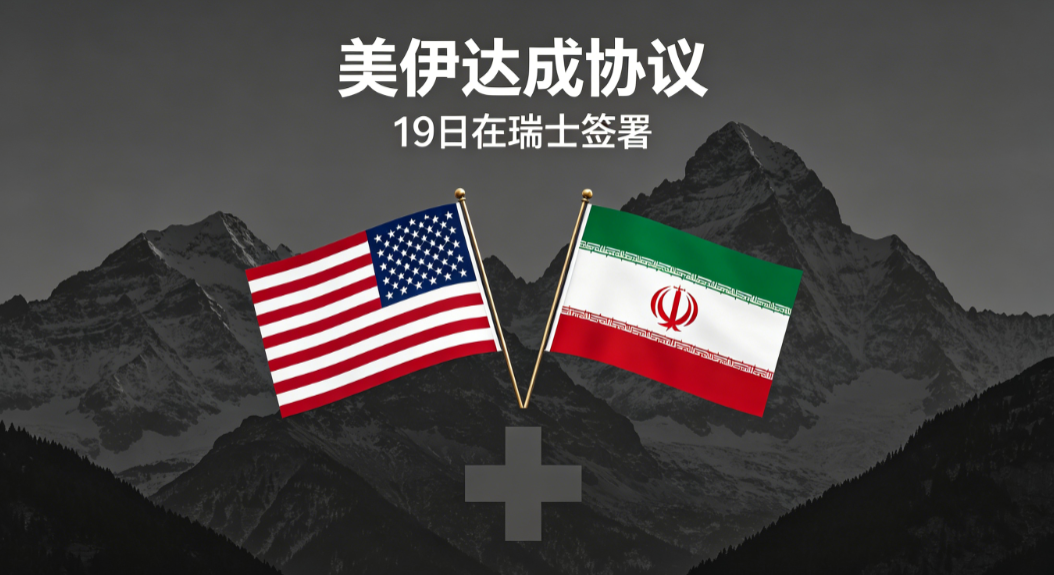
According to Iranian media on the 15th, the Supreme National Security Council of Iran issued an official statement early that morning confirming that the Iran-US ceasefire memorandum of understanding has been reached. Meanwhile, Iranian Deputy Foreign Minister Gharibabadi said the heads of both delegations will meet in Switzerland on the 19th, and after Iran verifies the US's fulfillment of relevant commitments, the two sides will launch 60 days of negotiations. US President Trump said on social media that the US-Iran agreement is "now complete" and that the Hormuz Strait will reopen. The latest developments show that the strained US-Iran relationship is entering a critical adjustment period.
Memorandum of Understanding Signed: Ceasefire Is Just the Starting Point
From Iran's perspective, this "memorandum of understanding" is more of a phased arrangement than a final agreement. Iran emphasized that the US must first deliver on commitments such as ending the war, lifting blockades, and unfreezing assets before formal negotiations start. This means Iran has not made concessions on core demands, making "execution" a precondition for subsequent talks.
Gharibabadi further noted that the 60-day talks will cover lifting all US sanctions on Iran, the Iran nuclear issue, and economic reconstruction and development, while establishing a mechanism to monitor both sides' compliance. Thus, the memorandum involves not only military and security aspects but also directly touches on sensitive areas like economic sanctions, nuclear disputes, and post-war reconstruction—essentially a framework arrangement covering broad interest exchanges.
Trump's Statements: Signaling and Keeping Room for Maneuver
Trump's statements carried strong political signaling. He claimed on social media that the agreement was "complete" and emphasized reopening the Hormuz Strait with "no tolls." This expression is both symbolic and carries clear policy messaging, aiming to signal de-escalation and normal shipping to domestic and international audiences.
However, Trump also stressed that the US would not provide funds to Iran but might consider lifting some sanctions, saying "we'll see how they behave." This shows the US, while pushing for the deal, still keeps conditional flexibility. In other words, the US wants to ease regional tensions and stabilize energy transport routes, but is unwilling to easily give up leverage against Iran.
Notably, Trump said specific details of the US-Iran agreement have not been released, and the text will be signed electronically by himself or Vice President Vance. This means what has been released is more political declaration than a complete legal document. Whether the agreement can actually be implemented depends on whether detailed negotiations and compliance monitoring mechanisms are operational and verifiable.
Regional Impact: Security Détente and Continuing Game
If the memorandum proceeds as scheduled, navigation safety in the Hormuz Strait, regional energy exports, and international market expectations could significantly improve. As a critical global energy chokepoint, the stability of the Hormuz Strait affects oil transport, shipping insurance, and international oil prices; its reopening would have practical significance in mitigating spillover risks.
But on a deeper level, the structural contradictions between Iran and the US have not disappeared. Sanctions relief, nuclear issues, asset unfreezing, and regional military presence have long been core points of disagreement. This memorandum is more like a phased achievement of "pause confrontation, enter negotiations" rather than an endpoint of comprehensive reconciliation. Especially with multiple conflicts still ongoing in the Middle East, any local détente could be affected by changes in the external situation.
Conclusion
Overall, Iran's formal confirmation of the US-Iran ceasefire memorandum marks a rare window of détente in bilateral relations. For Iran, it is an important opportunity to seek sanctions relief and economic space, and a critical moment to test US credibility. For the US, it is a realistic choice to balance regional stability, energy security, and leverage over Iran. The next 60 days of negotiations will determine whether this memorandum can be transformed from political declaration into truly executable arrangements, and will serve as a key indicator for the future course of the Middle East.