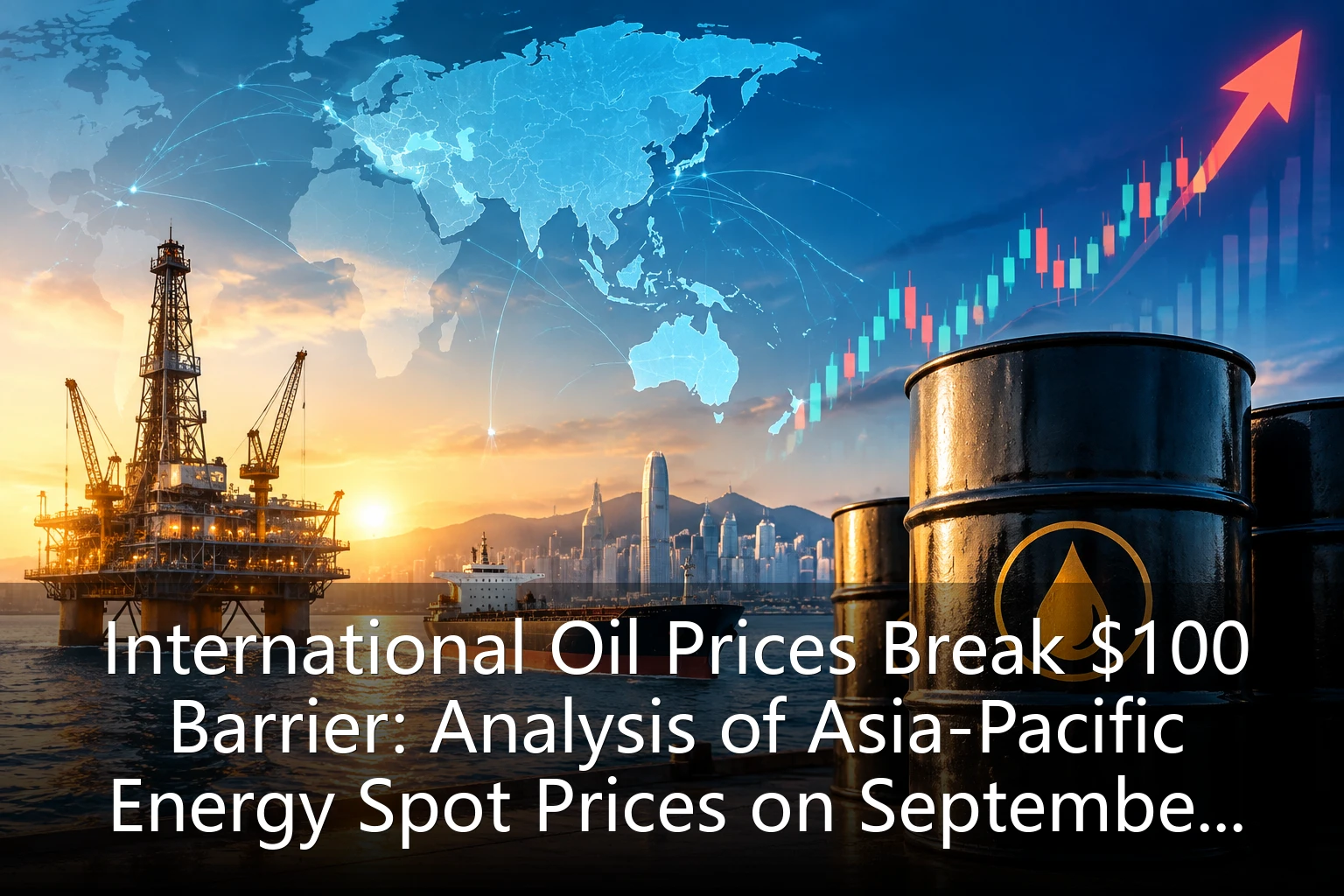

International Oil Prices Break $101 Mark: October 2nd Analysis of Asia-Pacific Energy Spot Prices
On October 2, 2026, the global energy market experienced significant volatility as international crude oil prices surpassed the $101 mark for the first time, setting a new high for the year. This breakthrough not only reflects the escalating geopolitical risks but also highlights the resilience of global energy demand. The Asia-Pacific region, as the world's largest energy consumer market, has seen intense focus on its energy price dynamics. This article will deeply analyze the current oil price trends, examine the underlying driving factors, and discuss the direction of energy security strategy adjustments in the Asia-Pacific region.
Geopolitical Escalation: Tensions Remain High in the Middle East
Recently, the situation in the Middle East has escalated again, becoming a core factor driving oil price increases. Tensions between Iran and Saudi Arabia have intensified, and the security situation of the Strait of Hormuz, a critical global oil transport route, has raised market concerns. Furthermore, the escalation of the Yemen conflict and the indirect confrontation between Israel and Iran have exacerbated regional instability. These geopolitical events have increased market expectations of crude oil supply disruptions, leading investors to flock to safe-haven assets and driving up oil prices.
Industry analysts point out that the Middle East supplies over 30% of global crude oil, and any conflict could trigger supply interruptions. Although OPEC+ countries have committed to maintaining stable production, geopolitical uncertainty keeps supply concerns alive in the market. Particularly in the Asia-Pacific region, many countries are highly dependent on Middle Eastern crude oil imports, meaning that rising oil prices directly impact energy costs and inflationary pressures.
Demand Resilience: Global Economic Recovery and Energy Transition Running Parallel
Despite geopolitical risks pushing up oil prices, the resilience of global energy demand cannot be overlooked. In 2026, the global economy shows signs of recovery, with industrial production and consumption demand steadily growing in major economies such as China, India, and Southeast Asian nations. Moreover, although the energy transition process is accelerating, traditional fossil fuels still dominate in the short term. Especially in the Asia-Pacific region, many countries are expanding refining capacity and infrastructure construction to meet growing energy needs.
Data shows that global crude oil demand is expected to grow by about 1.5% in 2026, with the Asia-Pacific region contributing the majority of this increase. China, as the world's largest crude oil importer, has driven demand growth through the recovery of its manufacturing and transportation sectors. Concurrently, the economic growth of India and Southeast Asian nations has boosted energy consumption. This demand resilience allows oil prices to remain high despite supply concerns.
Asia-Pacific Energy Market Dynamics: Price Fluctuations and Strategic Adjustments
As a barometer of global energy prices, the market dynamics of the Asia-Pacific region have a profound impact on the global energy landscape. On October 2nd, Asia-Pacific energy spot prices showed that Brent crude oil prices surpassed $102, and WTI crude oil prices neared $101. LNG spot prices also showed an upward trend, reaching $14.5 per million British thermal units, reflecting a tight balance in the natural gas market.
In response to rising oil prices, countries in the Asia-Pacific are adjusting their energy strategies. Major importing nations like China and India are increasing strategic petroleum reserves to cope with potential supply disruptions. At the same time, many countries are accelerating the development of renewable energy sources, such as solar and wind power, to reduce reliance on fossil fuels. However, the long-term nature of energy transition means that traditional energy still plays a vital role in the short term, leading countries to seek a balance between ensuring energy security and promoting green transformation.