
International Oil Prices Break $97 Mark: Asia-Pacific Energy Spot Price Analysis for September 24th
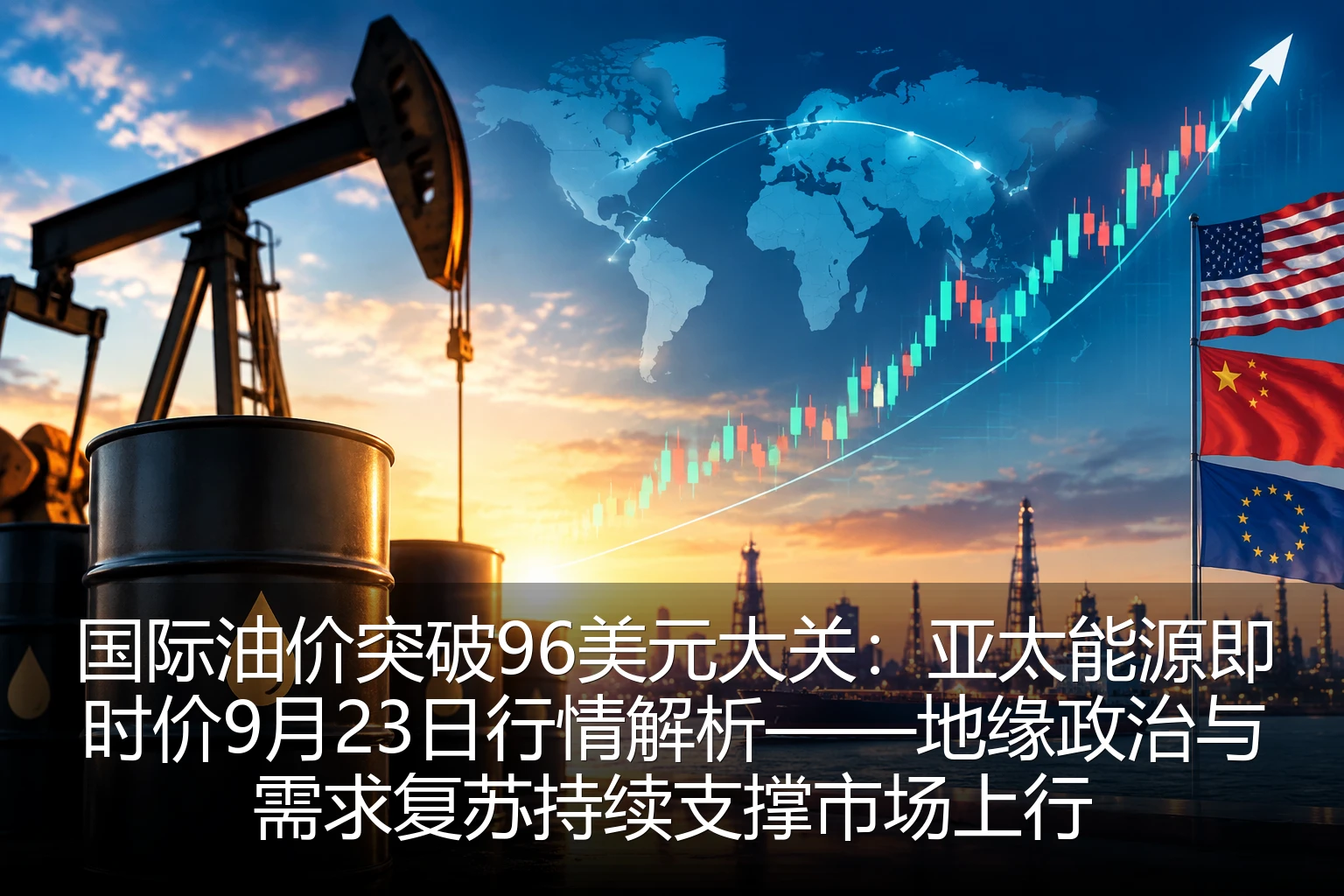
On September 24, 2026, the global energy market experienced another upheaval. Brent crude oil futures surpassed the $97 mark, closing at $97.15/barrel, an increase of 1.2% from the previous trading day; WTI crude oil futures also neared $96, closing at $95.85/barrel, up by 1.1%. This round of price increases was driven by multiple factors, including escalating geopolitical tensions, strengthening expectations of global demand recovery, and the continuation of OPEC+ production cuts. The Asia-Pacific region, as a core area for global energy consumption, also showed an upward trend in its energy spot prices, presenting new investment opportunities and risk challenges for market participants.
Escalating Geopolitical Tensions Increase Supply Uncertainty
Recently, the geopolitical situation in the Middle East has remained tense, with military standoffs around the Strait of Hormuz raising concerns in the market about potential disruptions to crude oil supply. The deterioration of diplomatic relations between Iran and Saudi Arabia has intensified the competition between the two in the energy sector. Furthermore, frequent attacks by Houthi militants in Yemen on Red Sea shipping have further disrupted global crude oil transportation channels. These geopolitical factors have directly driven up market expectations of supply interruptions, prompting investors to buy crude oil futures to hedge risks.
Analysts point out that the Strait of Hormuz is a vital choke point for global crude oil transportation, with approximately 20 million barrels passing through it daily. A conflict in this area could lead to a reduction of over 5% in global crude oil supply, causing significant price volatility. Currently, the market has partially priced in geopolitical risks, but oil prices still have room to rise if the situation deteriorates further.
Strong Global Demand Recovery Makes Asia-Pacific a Growth Engine
Despite the challenges of inflation and monetary policy tightening facing the global economy, the trend of energy demand recovery remains evident. Particularly in the Asia-Pacific region, the economic activity of emerging economies such as China and India has accelerated, driving growth in crude oil demand. Data shows that in the first half of 2026, crude oil demand in the Asia-Pacific region grew by 3.5% year-on-year, exceeding the global average. China, as the world's largest crude oil importer, has seen particularly significant recovery in its manufacturing and transportation industries, pushing crude oil imports to a record high.
Moreover, the end of the summer peak season has not weakened demand; instead, the early release of winter heating demand has strengthened long-term expectations for crude oil. The latest report from the International Energy Agency (IEA) predicts that global crude oil demand will increase by 1.2 million barrels per day in the second half of 2026, with the Asia-Pacific region contributing 60% of that growth. This robust momentum in demand provides solid support for oil prices.
OPEC+ Production Cuts Continue, Tightening Market Supply
OPEC+ (Organization of the Petroleum Exporting Countries and its allies) decided at a recent meeting to maintain production cuts, further tightening the global crude oil supply. Major oil-producing countries such as Saudi Arabia and Russia stated that they will continue voluntary cuts of 1 million barrels per day until the end of 2026. This policy adjustment exceeded market expectations, leading to a tightening of the crude oil supply side and driving up oil prices.
Analysts believe that the OPEC+ production cut policy has effectively balanced market supply and demand, preventing oil prices from excessive volatility due to demand growth. However, the sustainability of the production cut policy remains questionable, as some member countries may face fiscal pressures, leading to a relaxation of production cuts. Furthermore, the recovery rate of U.S. shale oil production is also worth watching; a significant increase in U.S. crude oil output could offset the impact of OPEC+ cuts. Asia-Pacific Energy Spot Price Trends: LNG and Natural Gas Prices Rise in Tandem As crude oil prices surpassed the $97 mark, spot prices for LNG (Liquefied Natural Gas) in the Asia-Pacific region also rose concurrently. On September 24th, Asian LNG spot prices closed at $14.5/Mtoe, an increase of 0.8% from the previous trading day. The high correlation between natural gas prices and crude oil prices has led to an overall upward trend in the energy market. As the world's largest LNG importer, the price fluctuations in the Asia-Pacific region have a significant impact on the global energy market. Growing natural gas demand from countries such as China, Japan, and South Korea, especially increased winter heating needs, has driven up LNG spot prices. Moreover, the tense situation in the European natural gas market has indirectly affected energy prices in the Asia-Pacific region, increasing concerns among market participants regarding supply security. Market Future Trend Analysis: Upside Potential Remains for Oil Prices, But Risks Cannot Be Ignored Looking ahead, there is still room for international oil prices to rise, but potential risks must be guarded against. On one hand, further deterioration in the geopolitical situation could trigger supply disruptions, pushing oil prices to continue rising; on the other hand, a slowdown in global economic growth could result in demand growth falling short of expectations, thereby curbing the rise in oil prices. Factors such as monetary policy adjustments by the Federal Reserve and fluctuations in the US dollar exchange rate may also influence oil price trends. For investors, current oil prices are high, requiring careful risk assessment. It is recommended to monitor geopolitical dynamics, OPEC+ policy adjustments, and global economic data to seize market opportunities. At the same time, the acceleration of the energy transition in the Asia-Pacific region means that new energy investment opportunities are also worth paying attention to, providing new growth points for the energy market. Conclusion On September 24, 2026, international oil prices surpassed the $97 mark, and Asia-Pacific energy spot prices rose in tandem. Geopolitical tensions, demand recovery, and the OPEC+ production cut policy are the main driving factors. The future trend of the market is full of uncertainty, but the overall trend remains upward. Investors must closely monitor market dynamics and allocate assets reasonably to cope with potential risks and opportunities.