
Cambodia's Sihanoukville Port and Phnom Penh Port achieved double-digit growth in revenue and container throughput in 2025. Leveraging China-Cambodia economic cooperation dividends and port infrastructure upgrades, regional cross-border logistics efficiency continues to improve, and foreign trade development momentum strengthens.
Cambodia's Ministry of Public Works and Transport recently released the 2025 annual operational statistics report for the two core state-owned ports, Sihanoukville Autonomous Port and Phnom Penh Autonomous Port, both achieving double-digit growth in annual revenue and container throughput. With deepening China-Cambodia economic and trade cooperation and continuous optimization of port clearance systems, Cambodia's foreign trade shipping sector has entered a stable upward development cycle, with regional cross-border supply chain vitality fully released.
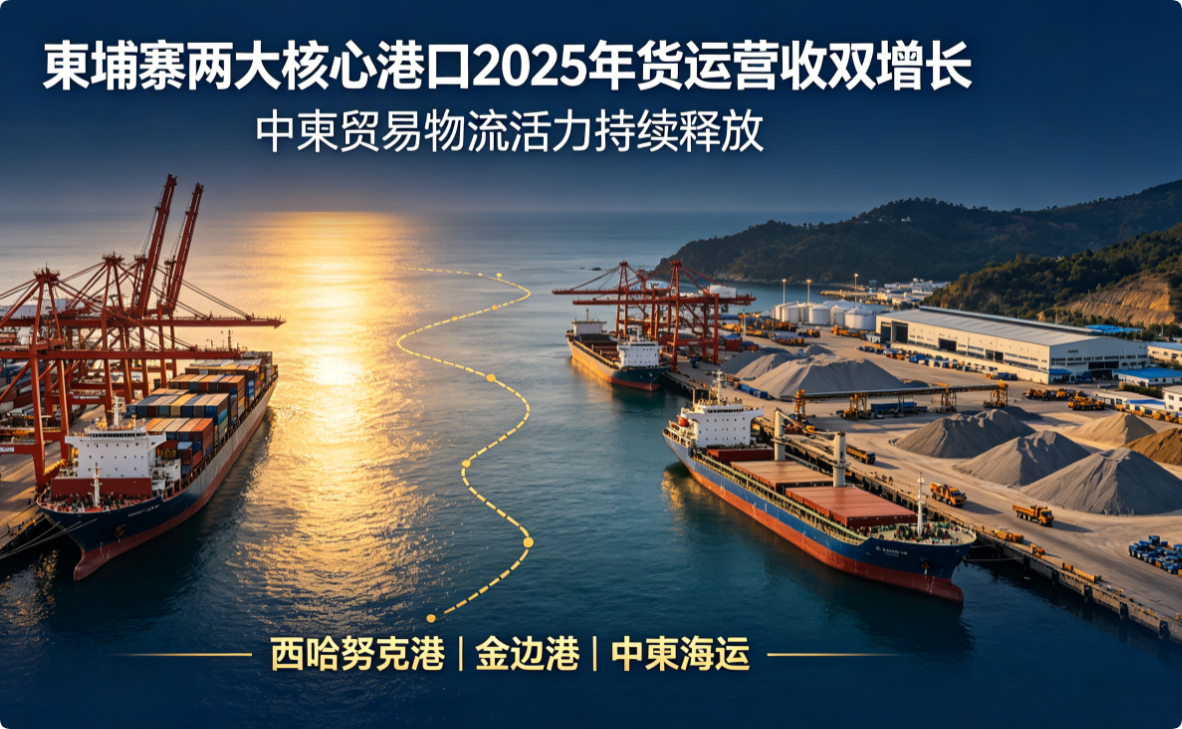
As Cambodia's only deep-sea foreign trade hub port, Sihanoukville Port handles over 70% of the country's maritime import and export volume. In 2025, Sihanoukville Port's total annual revenue reached $151 million, up 34.8% year-on-year; annual container throughput reached 1.23 million TEUs, up 25.7%. Garments and textiles, home furnishings and appliances, photovoltaic modules, natural rubber, and grain, oil, and agricultural products are the main import and export cargo categories on direct China-Cambodia routes. The third phase expansion of Sihanoukville Port is progressing steadily, with continuous upgrades to deep-water berths, warehousing parks, and other infrastructure, enhancing the port's ability to accommodate large deep-sea vessels and providing capacity support for bilateral trade growth.
Phnom Penh Port, as an important inland river logistics hub along the Mekong River, mainly serves the import and export of Cambodia's inland provinces, inland cross-border multimodal transport, and bulk cargo shipping, completing the national sea-land multimodal transport network. In 2025, Phnom Penh Port's annual revenue reached $53.3 million, up 23.7% year-on-year, and annual cargo throughput reached 5.6 million tons, effectively diverting inland cargo pressure from Sihanoukville Port and reducing logistics costs for inland enterprises in long-distance land transport to the sea.
In recent years, with the gradual increase in direct China-Cambodia container shipping routes, many foreign trade companies have abandoned the previous transit model through Vietnamese and Thai ports, choosing to ship directly from domestic ports to Sihanoukville Port. This not only reduces overall logistics costs by over 20% and significantly shortens cargo transit times but also effectively avoids various operational risks such as port congestion, cargo damage, and delays, further stimulating bilateral import and export trade potential.
The positive port cargo data is inseparable from Cambodia's continuously improving business and customs clearance environment. The local full promotion of the ASYHUB single-window paperless online customs declaration system has compressed document review and port inspection times; at the same time, the implementation of facilitation policies such as green channels for AEO advanced certification companies and classified inspections has significantly improved overall customs clearance efficiency, also attracting cargo from neighboring countries to choose Cambodian ports for transit business.
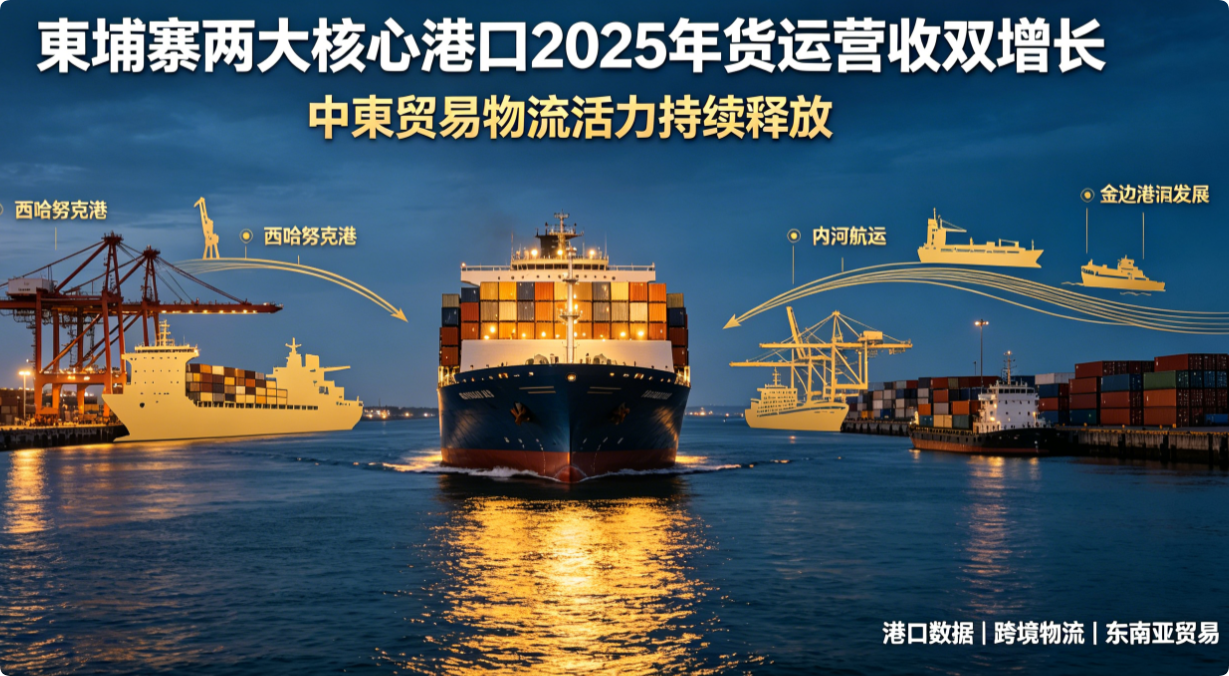
Industry analysis suggests that, relying on the stable capacity support of the two core ports, combined with infrastructure dividends such as Sihanoukville Port expansion and the implementation of multi-regional feeder port plans, Cambodia's node advantage in the Indochina Peninsula cross-border supply chain will further stand out. With the continued implementation of the China-Cambodia Free Trade Agreement and the development of cross-border industrial parks, bilateral maritime cargo volume is expected to maintain stable growth, continuously driving the development of upstream and downstream logistics industries such as freight forwarding, warehousing, trucking, and customs brokerage, contributing to the high-quality development of Indochina Peninsula economic and trade integration.