Cushing Inventory Plunge and Strait of Hormuz Gridlock: How Is the Global Oil Market Being Repriced?
Keywords: Cushing Inventory, Strategic Petroleum Reserve, Strait of Hormuz, WTI Crude, Brent Crude, Crude Spot, Oil Market
Introduction
The latest EIA data shows that Cushing, Oklahoma crude inventory has plunged to just 20 million barrels, nearing the operational pressure level widely recognized by the market. Meanwhile, the US Strategic Petroleum Reserve has fallen to its lowest since 1983, indicating a sustained and deep destocking process in the US oil system. On the surface, easing geopolitical tensions have brought oil price retreats; but with growing divergence between spot and futures markets, the real risk in the global crude market has not disappeared, and may instead be accumulating new volatility.
1. Cushing Inventory Nears Pressure Line, WTI Pricing System Under Stress
Cushing is not just a storage facility; it is the main delivery point for WTI crude futures. Its inventory changes directly affect North American crude pricing logic. The current drop to 20 million barrels means available buffer for allocation and delivery is tightening. Further declines would present two problems: first, reduced physical delivery capacity could disrupt the futures price anchoring function; second, regional supply tightness would more easily amplify price swings.
Rory Johnston of Commodity Context notes no signs of inventory pressure relief, a judgment worth heeding. Cushing inventory reflects not only storage levels but also the combined state of US mid-continent crude flow efficiency, refinery operating pace, and pipeline/logistics systems. In other words, declining inventory is not just a number but a concentrated reflection of US crude supply chain fragility.
2. Strategic Petroleum Reserve Depleted, Buffer Capacity Significantly Reduced
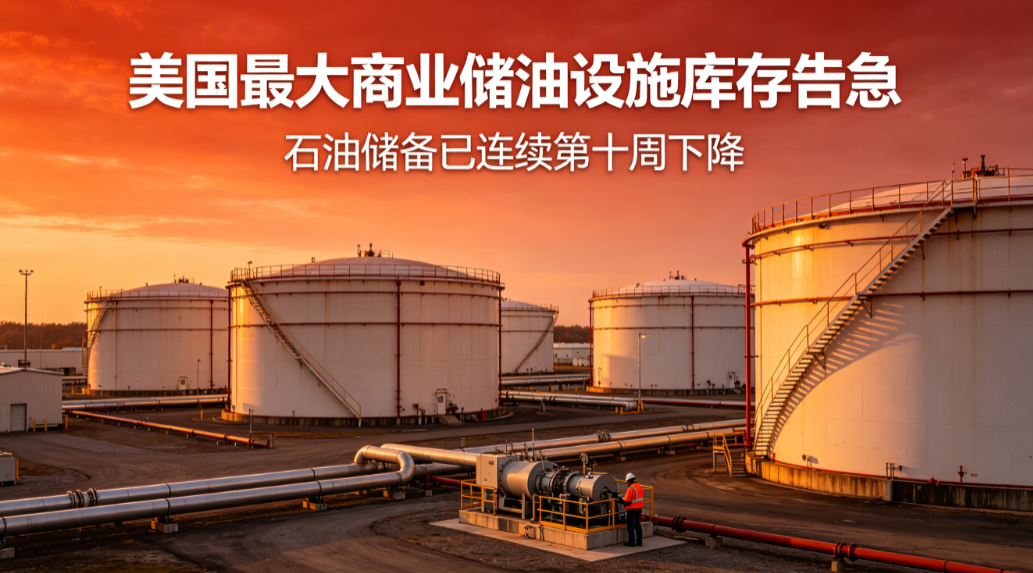
The US Department of Energy disclosed that the SPR in Louisiana and Texas has dropped to its lowest since 1983. This means the US government's policy buffer to address sudden geopolitical risks or supply disruptions has shrunk markedly. Historically, the SPR stabilized markets and cushioned supply shocks, but after ten consecutive weeks of decline, its flexibility is waning.
Notably, in the second week of June, commercial crude inventories fell by 8.3 million barrels, while the SPR dropped by 8.9 million barrels, indicating synchronized destocking across commercial and policy sectors. Such a simultaneous decline typically suggests strong spot market demand or slower-than-expected supply recovery. Either way, it points to the crude market not yet entering a loose phase.
3. Futures Optimistic, Spot Tight: Market Gap Widening
Recently, with easing US-Iran tensions and potential resumption of Strait of Hormuz passage, international oil prices have fallen notably, with Brent crude futures around $77/barrel. The futures market is clearly pricing in a "risk-off" expectation, believing the geopolitical premium will fade quickly. However, the spot market signals differ.
Shipping companies say even if an agreement is reached, normal passage through the Strait of Hormuz may take weeks. More importantly, even after reopening, damaged oil and gas infrastructure, transport chains, and downstream procurement cannot be repaired instantly. Phillip Nova analyst Priyanka Sachdeva points out that the end of conflict does not mean immediate reversal of damage; this "time lag" is the most easily overlooked risk.
When futures fall rapidly while spot prices remain high, arbitrage opportunities, restocking demand, and transport uncertainty collectively amplify market fragmentation. For importing countries, if concentrated restocking is needed in coming weeks, spot procurement pressure may push oil prices back up, potentially forcing a futures market repricing.
Conclusion
Overall, the current international oil market shows a typical "expectations loose, reality tight" pattern. The decline in Cushing inventory, depletion of SPR, slow recovery of Hormuz passage, and divergence between spot and futures paint a challenging picture. In the short term, geopolitical détente has indeed suppressed oil prices, but the downturn is more a temporary unwinding of risk premiums than a fundamental improvement in supply-demand dynamics.
Looking ahead, the key to oil market trends will not just be whether the conflict ends, but whether transport routes genuinely recover, inventories can be effectively replenished, and a restocking wave emerges in the spot market. Until these questions are answered, the global crude market will remain in a fragile equilibrium of high sensitivity and volatility.