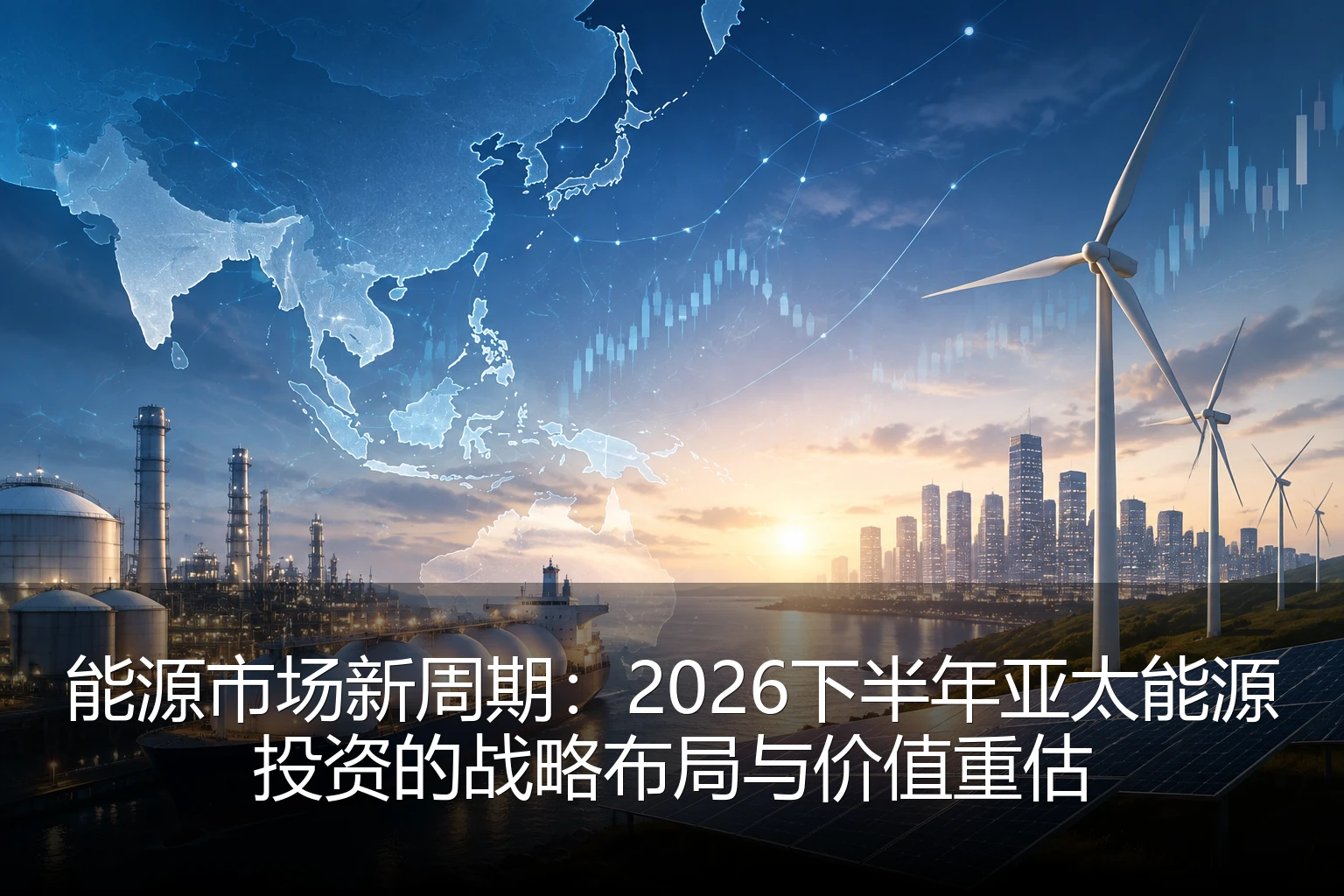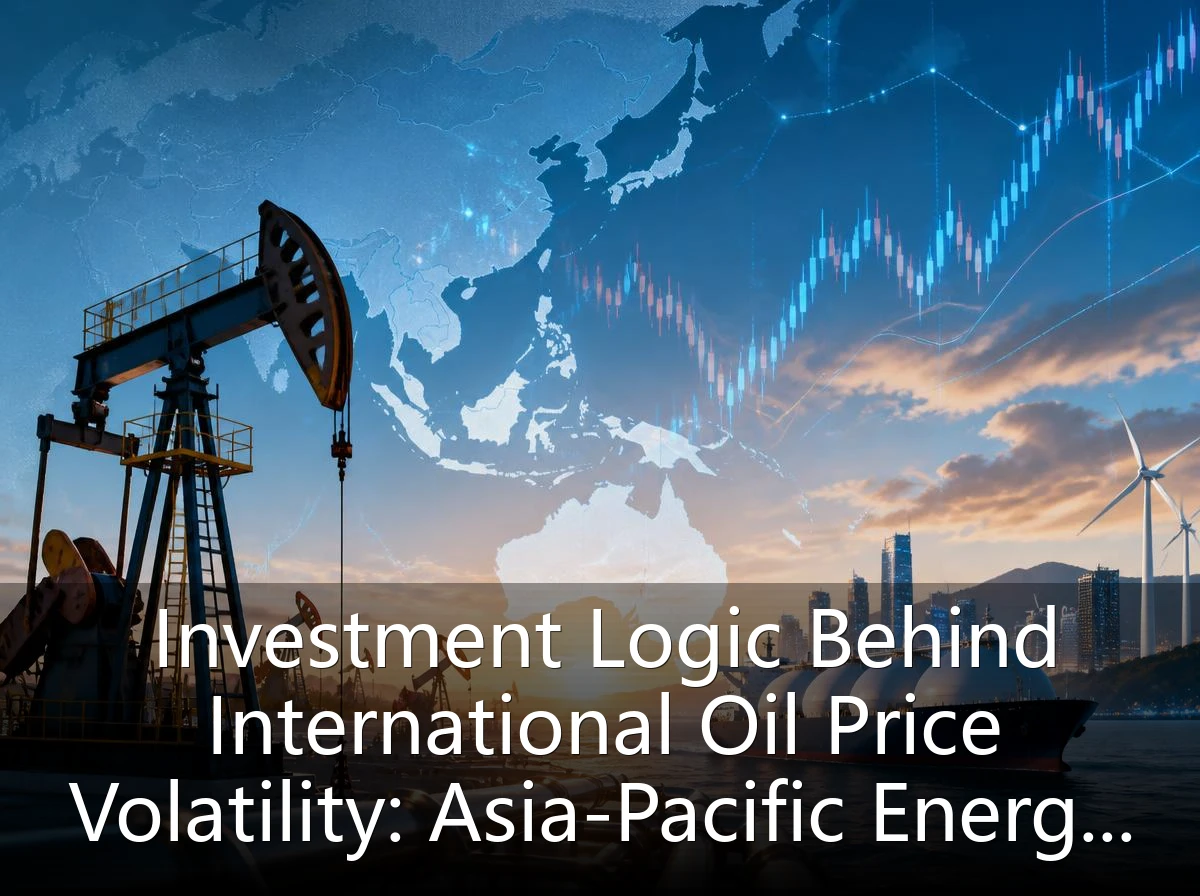

International Oil Prices Exceed $90: Asia-Pacific Energy Investment Enters a "Dual-Engine Driven" Strategic Opportunity Period
On August 25, 2026, Brent crude futures surpassed $90 per barrel, reaching a two-year high, while WTI crude also rose to $86 per barrel. This surge in oil prices has not only affected the global energy market but has also prompted energy investors in the Asia-Pacific region to re-examine the investment logic of traditional and new energy. In the view of Asia-Pacific Oil & Gas Finance, the $90 oil price breakthrough is driven by a "dual mechanism" of geopolitical tensions and the recovery of demand in the Asia-Pacific, a trend that presents new strategic opportunities for Asia-Pacific energy investment—where the short-term revaluation of traditional energy and the long-term growth potential of new energy are synergistic, becoming a key focus area for investors.
I. The "Dual-Engine Drive" of Oil Price Increase: Geopolitics and Demand Recovery
The core drivers behind the oil price exceeding $90 can be summarized as the two logics of "geopolitical tensions" and "Asia-Pacific demand recovery." From a geopolitical perspective, the ongoing tensions in the Middle East are the key catalyst. Recently, relations between Iran and Saudi Arabia have become tense again, and the shipping safety in the Strait of Hormuz faces uncertainty, increasing market concerns about crude oil supply. As a vital chokepoint for global crude oil transportation, the Strait of Hormuz handles approximately 20% of global crude oil trade; any conflict could lead to supply disruptions and further drive up oil prices. Furthermore, although the conflict between Russia and Ukraine has entered its third year, Western sanctions against Russia are still in effect, and the volatility in Russian crude oil exports has exacerbated global supply uncertainty.
From the demand side, the economic recovery in the Asia-Pacific region is a significant support for the rising oil prices. In the first half of 2026, China's GDP grew by 5.8% year-on-year, and India's economy grew by 6.2%, while the economic growth rates in Southeast Asian countries (such as Vietnam and Indonesia) remained above 5%. As the world's largest crude oil importing region, the Asia-Pacific accounts for over 40% of global crude oil demand. With the economic recovery, the crude oil demand in China and India continues to grow, especially the rebound in demand from sectors such as transportation and industrial production, driving up crude oil demand. Moreover, the expansion of refining capacity in the Asia-Pacific region (such as refinery expansions in China and India) has also increased the demand for crude oil, further supporting oil prices.
II. The "Dual-Engine Drive" of Asia-Pacific Energy Investment: Synergy Between Traditional and New Energy
The oil price exceeding $90 has an impact on Asia-Pacific energy investment through a "dual-engine drive"—the synergy between the short-term revaluation of traditional energy (crude oil, natural gas) and the long-term growth potential of new energy (photovoltaics, wind power, energy storage) has become a key direction for investors.
1. Traditional Energy: Short-Term Value Revaluation and Midstream Infrastructure Opportunities
For traditional energy, the rising oil prices directly enhance the investment value of crude oil and natural gas. On one hand, the profit margins of crude oil producers have expanded, particularly for low-cost producers in the Middle East and Russia, whose profitability has significantly increased. For example, Saudi Aramco's net profit grew by 15% in the first half of 2026, reaching $120 billion, a historic high. On the other hand, as a substitute energy source for crude oil, the demand for natural gas has also increased with the rise in oil prices. Spot prices for LNG recently returned to $12 per million British thermal units, a 30% increase from the beginning of 2026, highlighting the investment value of natural gas midstream infrastructure (such as LNG receiving terminals and pipelines).
In the Asia-Pacific region, midstream infrastructure for natural gas is a key focus for capital. For example, the third phase of China's West-to-East gas pipeline, India's Eastern Gas Pipeline project, and LNG receiving station expansions in Southeast Asia are all accelerating. These projects not only meet the natural gas demand in the Asia-Pacific region but also generate stable returns amid rising oil prices. Furthermore, the profitability of crude oil refining enterprises is also increasing with rising oil prices, such as Chinese Petrochemical and Indorama, whose net profit growth in the first half of 2026 exceeded 20%, making them important targets for investors in traditional energy. 2. New Energy: Long-term Growth Potential and Synergy Although rising oil prices have increased the value of traditional energy, the long-term growth potential of new energy has not diminished; rather, it has accelerated due to the rise in oil prices. The increase in oil prices drives the acceleration of energy transition because high oil prices increase the cost of using fossil fuels, prompting enterprises and consumers to switch to new energy. For instance, China's "Dual Carbon" goals (peaking carbon emissions before 2030 and achieving carbon neutrality before 2060) require a significant reduction in the use of fossil fuels and an increase in the proportion of new energy. In 2026, China's installed photovoltaic capacity reached 120GW, a year-on-year increase of 25%; wind power installed capacity reached 50GW, a year-on-year increase of 20%. India has also set a target of 50% renewable energy share by 2030, with installed renewable energy capacity reaching 80GW in 2026. Moreover, the synergy between new and traditional energy is also strengthening. For example, the intermittent nature of new energies like photovoltaics and wind power requires energy storage systems to balance supply and demand, and the investment value of energy storage systems increases with the increase in new energy installed capacity. In 2026, the investment in energy storage systems in the Asia-Pacific region reached 50 billion USD, a year-on-year increase of 40%. Concurrently, the integration of new and traditional energy (such as "wind-solar-storage integrated" projects) has become a new investment direction, as these projects can utilize the cleanliness of new energy while improving the stability of the energy system through the peaking capabilities of traditional energy. III. Policy Dividends and Market Sentiment: Catalysts for Asia-Pacific Energy Investment In addition to the "dual-wheel drive" logic, policy dividends and market sentiment are also important catalysts for Asia-Pacific energy investment. 1. Policy Support: Balancing Green Transition and Energy Security Governments in Asia-Pacific countries are issuing policies to support energy transition and energy security. For example, China's "15th Five-Year Plan" (2026-2030) proposes that the total energy investment reach 20 trillion RMB from 2026 to 2030, with new energy investment accounting for 60% and traditional energy investment accounting for 40%. India's "National Renewable Energy Target" aims for 500GW of installed renewable energy capacity by 2030, with 300GW of solar installed capacity. Southeast Asian countries (such as Vietnam and Indonesia) have also introduced new photovoltaic policies to encourage enterprises to invest in photovoltaic projects, such as Vietnam's "photovoltaic subsidy policy," which raised the photovoltaic electricity price from $0.08/kWh in 2025 to $0.10/kWh in 2026. Furthermore, energy security has become a policy focus. For instance, China has proposed a strategy of "energy self-reliance and control," which requires increasing domestic crude oil and natural gas production and reducing reliance on imports. In 2026, China's domestic crude oil production is expected to reach 210 million tons, a year-on-year increase of 3%; natural gas production is expected to reach 220 billion cubic meters, a year-on-year increase of 5%. India has also set the goal of "energy independence," requiring an increase in domestic natural gas production and a reduction in import dependence. These policies have not only supported traditional energy investment but have also promoted the development of new energy. 2. Market Sentiment: Green Bonds and ESG Investment Heating Up In terms of market sentiment, the issuance of green bonds has surged, and ESG investment has become a hot topic. In the first half of 2026, the issuance of green bonds in the Asia-Pacific region reached $120 billion, a year-on-year increase of 40%. Among these, China's green bond issuance reached $60 billion, India's reached $30 billion, and Southeast Asian countries' reached $30 billion. These green bonds are mainly used for new energy projects (such as photovoltaics, wind power, and energy storage) and energy transition projects (such as carbon capture, utilization, and storage). Furthermore, ESG (Environmental, Social, and Governance) investment has also attracted investors. The scale of ESG funds in the Asia-Pacific region reached $500 billion, a year-on-year increase of 30%. These funds mainly invest in new energy enterprises, traditional energy transition enterprises, and companies that meet ESG standards. For example, China's "New Energy ETF" reached $100 billion, and India's "Renewable Energy ETF" reached $50 billion. The inflow into these funds provides sufficient financial support for new energy and traditional energy transition enterprises. IV. Risks and Challenges: Balancing Opportunities and Risks Although Asia-Pacific energy investment has welcomed opportunities driven by "dual momentum," risks and challenges cannot be overlooked. 1. Geopolitical Risks: Possibility of Supply Disruption Geopolitical risk is the biggest uncertainty. For example, conflicts in the Strait of Hormuz could lead to crude oil supply disruptions, driving oil prices to rise further, thereby affecting the profitability of traditional energy projects. Moreover, the conflict between Russia and Ukraine could cause fluctuations in global crude oil supply, increasing uncertainty in the energy market. Investors need to closely monitor changes in the geopolitical situation and adopt hedging strategies (such as futures and options) to mitigate risks. 2. Price Volatility Risks: Fluctuations in Traditional Energy Project Profitability Oil price volatility is a major risk for traditional energy projects. For example, fluctuations in crude oil prices can lead to profit fluctuations in refining enterprises, affecting their profitability. Furthermore, fluctuations in natural gas prices can also affect the revenue of LNG receiving stations. Investors need to select traditional energy projects with cost advantages or use long-term contracts (such as long-term supply contracts for crude oil and natural gas) to lock in returns. 3. Policy Change Risks: Adjustments to New Energy Subsidies Adjustments to new energy subsidy policies are also a risk. For example, China's photovoltaic subsidy policy may expire in 2027, leading to a decrease in the profitability of photovoltaic projects. India's renewable energy subsidy policies may also be adjusted, affecting the profitability of wind and photovoltaic projects. Investors need to closely monitor policy changes, select competitive new energy projects, or adopt a "subsidy + market" dual-track strategy to reduce policy risks.V. Conclusion: Balancing Traditional and New Energy to Seize the "Dual-Engine Drive" Opportunity
The international oil price surpassing the $90 mark signals the entry of the Asia-Pacific energy market into a new cycle. For investors, it is necessary to seize the short-term revaluation opportunities in traditional energy while also planning for the long-term growth potential of new energy. Within the strategic framework of "dual-engine drive," Asia-Pacific energy investment will encounter more opportunities, but risks must also be guarded against.
Specifically, investors can adopt a "Traditional Energy + New Energy" combined strategy: on the one hand, they can gain short-term returns by selecting traditional energy projects with cost advantages (such as crude oil producers in the Middle East and Russia, and midstream gas infrastructure projects in the Asia-Pacific region); on the other hand, they can secure long-term growth potential by investing in new energy projects (such as photovoltaic and wind power projects in China, renewable energy projects in India, and photovoltaic projects in Southeast Asia). Furthermore, attention can be paid to integrated projects combining new and traditional energy (such as "wind-solar-storage integrated" projects) to enhance the stability of the energy system and reduce risks.
In summary, Asia-Pacific energy investment is entering a strategic period of "dual-engine drive," and investors must balance the investment proportions of traditional and new energy to achieve value growth amidst volatility.