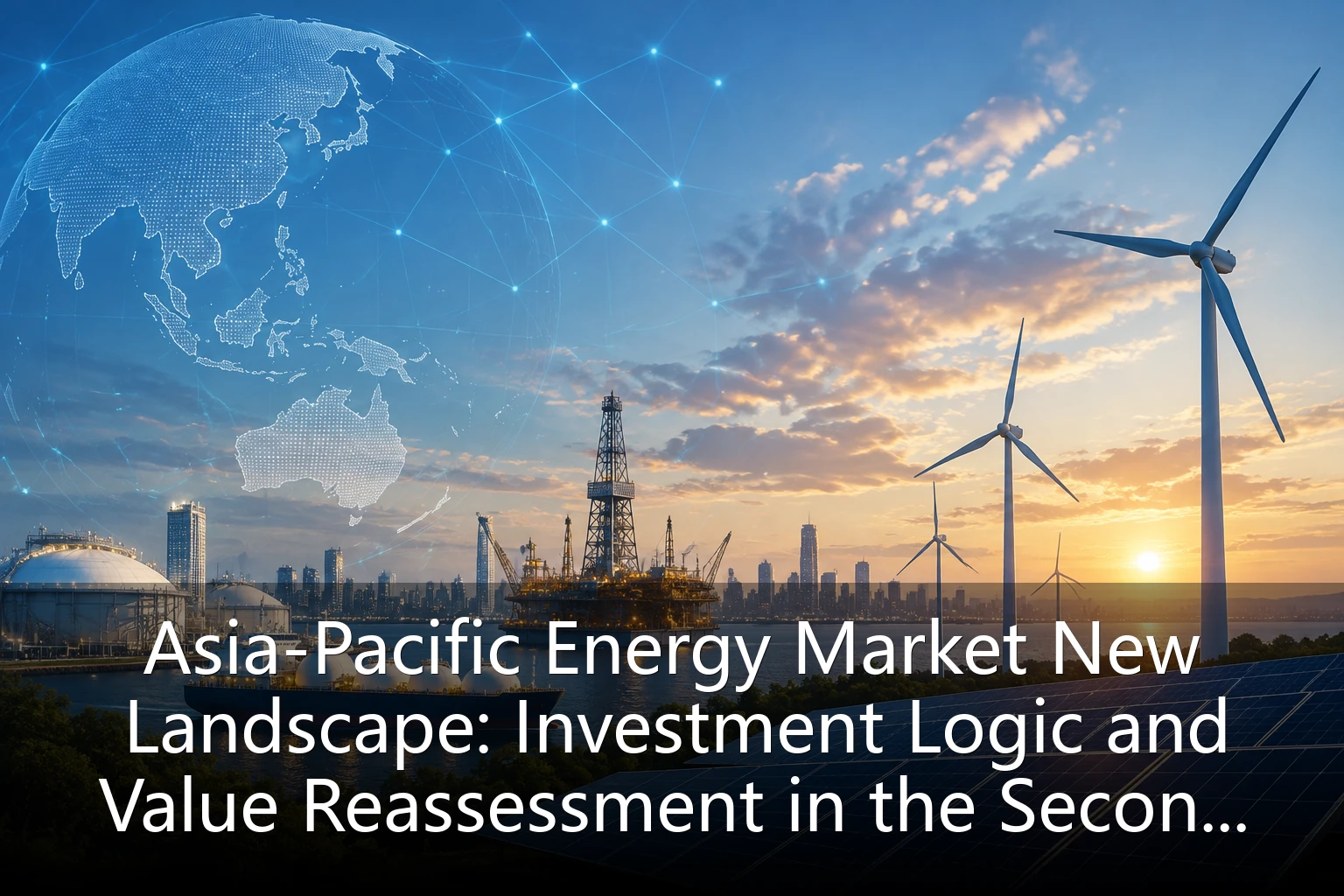

New Energy Market Cycle: Strategic Layout and Value Reassessment of Asia-Pacific Energy Investment in the Second Half of 2026
In 2026, the global energy market is at a critical period of profound transformation. The reshaping of geopolitical landscape, accelerated energy structure transition, technological innovation, and carbon neutrality goals are collectively driving the energy market into a new cycle. As a major region for global energy consumption and investment, the Asia-Pacific region is facing unprecedented opportunities and challenges. This article will conduct an in-depth analysis of the logic and prospects of Asia-Pacific energy investment from three dimensions: energy market trends, investment value, and strategic layout.
Reshaping of the Global Energy Market Landscape
Currently, the global energy market is undergoing multiple structural changes. On one hand, the substitution relationship between traditional and new energy is undergoing a fundamental transformation. With the continuous decline in renewable energy costs, the global energy structure is accelerating its transition toward a cleaner, low-carbon direction. According to data from the International Energy Agency (IEA), global renewable energy installed capacity is expected to reach 6500GW in 2026, accounting for 45% of total installed capacity, nearly doubling from 2020.
On the other hand, the influence of geopolitical factors on the energy market has significantly increased. The continued turmoil in the Middle East, the protracted Russia-Ukraine conflict, and intens great power competition have made energy security a core consideration in national energy strategies. Against this backdrop, the volatility of the energy market has significantly increased, price formation mechanisms have become more complex, bringing new challenges and opportunities for energy investment.
The Uniqueness of the Asia-Pacific Energy Market
As the center of global energy consumption and trade, the Asia-Pacific region's energy market has unique characteristics and complexities. Firstly, energy demand in the Asia-Pacific region continues to grow, but energy resources are unevenly distributed. Major economies such as China, India, Japan, and South Korea have enormous energy consumption, but limited domestic resources and high dependence on imports, making energy security particularly prominent.
Secondly, the Asia-Pacific region shows obvious characteristics of energy structure diversification. Traditional fossil fuels and renewable energy coexist, and different countries are at significantly different stages of energy development. This diversified landscape not only provides broad space for energy investment but also increases the complexity of investment decisions.
Thirdly, the energy policy environment in the Asia-Pacific region is dynamically changing. Countries are continuously adjusting their carbon neutrality goals, energy transition strategies, and energy subsidy policies, creating policy dividends for energy investment while also bringing policy risks.
Core Value of Energy Investment
In the current market environment, the core value of energy investment is mainly reflected in the following aspects:
- Inflation-resistant characteristics: As physical assets, energy assets have natural inflation-resistant properties, maintaining value stability in inflationary environments. Especially against the backdrop of increasing global inflationary pressure, the value preservation and appreciation function of energy investment has become more prominent.
- Opportunities from cyclical fluctuations: The energy market has strong cyclical characteristics, and price fluctuations provide professional investors with opportunities to buy low and sell high. By accurately grasping market cycles, excess returns can be achieved.
- Energy transition dividends: With the acceleration of energy structure transformation, investment opportunities in new energy, energy storage, hydrogen energy, and other fields continue to emerge. These fields not only have high growth potential but also enjoy dual dividends of policy support and market demand.
- Long-term stable cash flow: Traditional energy infrastructure projects typically have long operational cycles and stable cash flow characteristics, making them suitable for long-term value investment and institutional allocation.
Investment Prospects in Different Energy Sectors
Traditional Energy Sector
Although the global energy structure is transitioning toward cleaner energy, traditional energy will still play an important role for quite a long time in the future. In terms of investment strategy, the following aspects should be focused on:
- High-quality oil and gas assets: Oil and gas assets with characteristics of low cost, long life, and high returns still have investment value. Especially in the Asia-Pacific region, with the acceleration of infrastructure construction such as LNG terminals and pipelines, investment opportunities in midstream and downstream sectors are increasing.
- Energy infrastructure: Energy infrastructure projects such as gas storage facilities, LNG terminals, and integrated refining and petrochemical facilities have stable cash flow and long investment cycles, suitable for long-term value investment.
- High-efficiency energy enterprises: Against the backdrop of energy transition, traditional energy companies that can effectively control costs, improve efficiency, and actively develop new energy have greater investment value.
New Energy Sector
New energy is the most dynamic field in energy investment, mainly including the following aspects:
- Photovoltaic and wind power: With technological advancements and economies of scale, the costs of photovoltaic and wind power continue to decline, achieving grid parity. The Asia-Pacific region has abundant solar and wind energy resources, with obvious advantages in the manufacturing of photovoltaic components and wind power equipment. Investment opportunities are mainly concentrated in photovoltaic power plants, wind farms, and equipment manufacturing.
- Energy storage technology: Energy storage is the key technology to solve the intermittency problem of renewable energy and is also an important direction for new energy investment. Technical routes such as battery energy storage, pumped hydro storage, and compressed air energy storage all have broad prospects.
- Hydrogen energy industry: As a clean energy carrier, hydrogen energy has broad application prospects in industry, transportation, construction, and other fields. Green hydrogen production, storage, transportation, and application are investment priorities.
- Smart grid: With the increasing proportion of renewable energy, grid intelligence has become an inevitable trend. Investment opportunities in smart grid technology, virtual power plants, demand-side management, and other fields continue to emerge.
Risks and Response Strategies for Energy Investment
Although energy investment has broad prospects, it also faces many risks, mainly including policy risks, market risks, technical risks, and environmental risks. The following strategies are needed to address these risks:
- Diversified investment portfolio: By investing in projects of different energy types, different regions, and different development stages, investment risks can be diversified, and the stability of overall returns can be improved.
- Long-term value investment: Energy projects typically have long investment cycles, so a long-term value investment strategy should be adopted to avoid irrational decisions caused by short-term market fluctuations.
- Policy tracking and prediction: Closely follow changes in national energy policies, predict policy trends in advance, adjust investment strategies, and capture policy dividends.
- Technology innovation-driven: Pay attention to the dynamics of energy technology innovation, invest in enterprises and projects with technological advantages, and obtain technology dividends.
- ESG integrated investment: Incorporate environmental, social, and governance factors into investment decisions, invest in enterprises and projects with strong sustainable development capabilities, and reduce long-term investment risks.
Strategic Layout of Asia-Pacific Energy Investment in the Second Half of 2026
Based on the analysis of energy market trends and investment value, Asia-Pacific energy investment in the second half of 2026 should focus on the following strategic directions:
Coordinated Development of Traditional and New Energy
During the energy transition process, traditional energy and new energy are not simply substituting each other but have a symbiotic relationship. Investors should pay attention to the transformation strategies of traditional energy companies and invest in enterprises and projects that can effectively integrate traditional energy and new energy resources. Especially projects with coordinated development of LNG and renewable energy have broad prospects in the Asia-Pacific region.
Energy Infrastructure Upgrade
With the transformation of the energy structure, energy infrastructure needs to be upgraded simultaneously. Investors should pay attention to opportunities in the following areas:
- Natural gas infrastructure: LNG terminals, gas storage facilities, natural gas pipelines, etc.
- Power grid infrastructure: Smart grids, ultra-high voltage transmission, distributed energy systems, etc.
- Energy storage facilities: Battery energy storage, pumped hydro storage, hydrogen storage and transportation facilities, etc.
- Carbon capture and storage (CCS) facilities
Energy Digitalization and Intelligence
Digital technology is profoundly changing the production, transmission, and consumption methods of the energy industry. Investors should pay attention to opportunities in the following areas:
- Energy internet platforms
- Smart grids and virtual power plants
- Energy big data and artificial intelligence applications
- Application of blockchain technology in energy trading
Regional Integration Investment Opportunities
The energy integration process in the Asia-Pacific region is accelerating, and regional energy cooperation projects continue to emerge. Investors should pay attention to opportunities in the following areas:
- Regional grid interconnection projects
- Cross-border natural gas pipeline projects
- Regional energy trading centers
- Transnational energy technology cooperation projects
Conclusion and Outlook
In the second half of 2026, the Asia-Pacific energy market will usher in a new investment cycle. Against the backdrop of reshaping the global energy landscape and accelerating the transformation of the energy structure, energy investment faces both challenges and tremendous opportunities. Investors should base themselves on long-term value, grasp the trend of energy transition, build a diversified energy investment portfolio, and find value growth points in the coordinated development of traditional and new energy.
Looking to the future, with the deepening of carbon neutrality goals and continuous innovation in energy technology, the Asia-Pacific energy market will show more diversified, cleaner, and intelligent characteristics. Energy investment will no longer be limited to traditional oil and gas fields but will expand to the entire energy value chain, including multiple dimensions such as new energy, energy storage, hydrogen energy, and smart grids. For investors, understanding the new cycle characteristics of the energy market and grasping the investment opportunities brought by energy transition will be the key to achieving long-term value growth.
In the process of energy investment, investors should closely follow policy changes, technological progress, and market dynamics, adopt flexible and diverse investment strategies, and fully share the dividends brought by energy transformation under the premise of controllable risks. At the same time, attention should be paid to the ESG investment concept, incorporating sustainable development factors into investment decisions to achieve a win-win situation between economic and social benefits.