
Global Energy Transition Era: Structural Changes Behind Oil Price Volatility
\nIn October 2026, the global energy market is in an unprecedented period of transition, with international oil prices showing complex and volatile trends. As important observers of the Asia-Pacific energy market, we conduct an in-depth analysis of the structural factors behind current oil price fluctuations and their profound impact on the energy strategies of the Asia-Pacific region.
\n\nCurrent Oil Market Overview
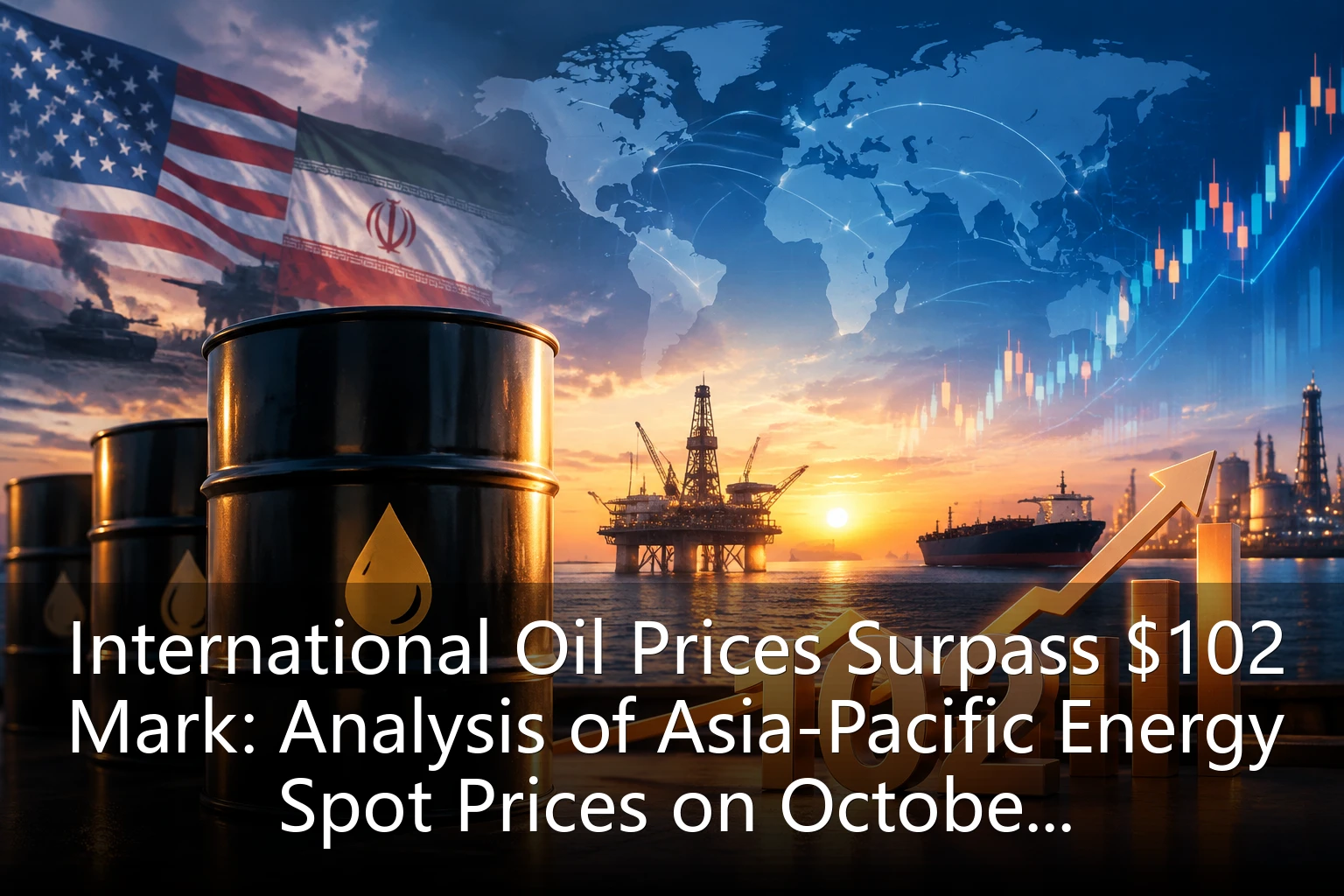
\nAs of early October 2026, international crude oil prices have shown high-level volatility. Brent crude prices have remained in the range of $103-105 per barrel, while WTI crude oil prices have fluctuated between $100-102. Although this price level has fallen from the beginning of the year, it remains in a historically high range, reflecting that the global energy market is in a period of deep adjustment.
\n\nNotably, unlike past oil price fluctuations driven solely by geopolitical factors, current oil prices exhibit more complex fundamental characteristics. On one hand, the global energy transition is accelerating, with growth in traditional oil demand slowing down; on the other hand, new energy infrastructure is not yet fully mature, leading to structural imbalances in the energy market. This "transition pain" is becoming an emerging factor affecting oil prices.
\n\nAnalysis of Multiple Factors Affecting Oil Prices
\nGeopolitical Factors Continue to Ferment
\nThe situation in the Middle East remains a key factor affecting oil prices. In the third quarter of 2026, military activities in the area around the Strait of Hormuz have increased, and political gamesmanship between major oil-producing countries continues. Although large-scale conflicts have not yet occurred, market concerns about supply chain disruptions still exist, and this "risk premium" provides bottom support for oil prices.
\n\nAt the same time, energy relations between Russia and Western countries remain tense. Although Europe's dependence on Russian energy has decreased, imports of Russian energy into Asian markets have increased. This reshaping of the geopolitical landscape is changing the global energy flow paths, thereby affecting regional oil price differences.
\n\nNew Changes in Supply-Demand Relationship
\nFrom the supply side, OPEC+ countries continue to maintain production restrictions, but US shale oil production continues to grow, and the share of non-OPEC oil-producing countries in the global market is constantly increasing. This diversification of supply structure reduces market dependence on a single oil-producing country and enhances the resilience of global energy supply.
\n\nThe demand side presents a more complex situation. On one hand, global economic recovery drives energy demand growth, especially the industrial production and transportation demand of emerging Asian economies continues to be strong; on the other hand, the acceleration of energy transition, the increase in electric vehicle penetration, and the implementation of energy efficiency improvement measures have significantly slowed the growth of oil demand. This differentiation in demand growth challenges traditional supply-demand balance models.
\n\nThe Relationship Between Energy Transition and Oil Prices
\nEnergy transition is becoming an emerging structural factor affecting oil prices. As the global carbon neutrality process accelerates, countries are formulating energy transition timetables, which leads to a decline in the long-term investment willingness of oil companies, insufficient investment in upstream exploration and development, and limited long-term supply growth potential. Meanwhile, the large-scale construction of new energy infrastructure requires a lot of energy input, which in the short term increases demand for traditional energy sources. This "transition paradox" is becoming the new normal for the market.
\n\nIn addition, energy transition has also changed the pricing mechanism of the energy market. As the proportion of renewable energy increases, the correlation between energy prices and climate factors strengthens, and the impact of extreme weather events on energy supply is becoming increasingly prominent. This change increases the volatility of the energy market and makes price forecasting more difficult.
\n\nStrategic Adjustments in Asia-Pacific Energy
\nAcceleration of Energy Diversification Strategy
\nFacing the dual challenges of high oil prices and energy transition, Asia-Pacific countries are accelerating the implementation of energy diversification strategies. On one hand, they are increasing natural gas imports, especially LNG resource development, to reduce dependence on oil; on the other hand, they are actively developing renewable energy to increase energy self-sufficiency. Major economies such as China, Japan, and South Korea are adjusting their energy structures, increasing the proportion of clean energy, and optimizing the efficiency of traditional energy use.
\n\nDeepening of Regional Cooperation Mechanisms
\nEnergy cooperation in the Asia-Pacific region is entering a new stage. In 2026, the APEC Energy Working Group proposed the "Asia-Pacific Energy Security Partnership" initiative, aiming to strengthen coordination of regional energy infrastructure construction and improve the resilience of energy supply chains. At the same time, ASEAN is also promoting regional energy interconnection projects, reducing the risk of single energy dependence through energy trade complementarity.
\n\nAcceleration of Energy Technology Innovation
\nTechnology innovation has become a key path for the Asia-Pacific region to respond to energy challenges. In cutting-edge technology fields such as carbon capture and storage (CCUS), hydrogen energy, and advanced nuclear energy, Asia-Pacific countries are increasing R&D investment. Japan and South Korea are in a global leading position in the hydrogen industry chain, while China has significant advantages in the manufacturing of renewable energy equipment. These technological innovations are reshaping the Asia-Pacific energy landscape.
\n\nAnalysis of Market Investment Strategies
\nChanges in Traditional Energy Investment Logic
\nAgainst the dual background of high oil prices and energy transition, the investment logic of traditional energy is undergoing fundamental changes. Investors are paying more attention to companies' low-carbon transition strategies and sustainable development performance rather than simply production scale. Those oil companies that can effectively manage transition risks and layout new energy businesses are obtaining higher market valuations.
\n\nOpportunities in New Energy Investment Highlighted
\nEnergy transition brings new opportunities for investors. In the renewable energy sector, especially offshore wind power, solar photovoltaics, and energy storage technology, the Asia-Pacific market is showing rapid growth. According to market analysis, new energy investment in the Asia-Pacific region is expected to exceed $300 billion in 2026, with an annual growth rate maintained at over 15%, making it one of the most dynamic new energy markets globally.
\n\nRe-evaluation of Energy Infrastructure Investment Value
\nWith the transformation of the energy structure, the value of traditional energy infrastructure is facing re-evaluation. On one hand, traditional refineries and oil pipelines may face stranded asset risks; on the other hand, new energy assets such as integrated energy services, smart grids, and hydrogen infrastructure are becoming investment hotspots. Investors need to re-evaluate the long-term value of energy infrastructure and grasp structural opportunities during the transition process.
\n\nFuture Outlook and Policy Recommendations
\nShort-term Market Trend Forecast
\nLooking ahead 6-12 months, international oil prices may continue to show high-level volatility. On one hand, geopolitical risks and supply restriction factors will continue to support oil prices; on the other hand, global economic growth slowdown and accelerated energy transition will suppress oil prices. Brent crude prices are expected to fluctuate in the range of $95-110, and WTI crude prices will operate in the range of $90-105.
\n\nAsia-Pacific Energy Policy Recommendations
\nFacing the new normal of energy transition and oil price fluctuations, Asia-Pacific countries should adopt the following policy measures: first, strengthen energy market monitoring and early warning mechanisms to improve the foresight and flexibility of energy policies; second, promote energy technology innovation and industrial upgrading to improve energy utilization efficiency; third, deepen regional energy cooperation to build a diversified energy supply system; finally, improve the energy price formation mechanism to balance the relationship between energy security and sustainable economic development.
\n\nEnterprise Strategic Adjustment Recommendations
\nFor energy enterprises, they should actively adapt to the trend of energy transition and adopt the following strategic measures: first, optimize the asset portfolio, reduce the proportion of high-carbon assets, and increase clean energy investment; second, strengthen digital transformation to improve operational efficiency and market response capabilities; third, innovate business models, transforming from energy suppliers to integrated energy service providers; fourth, strengthen risk management and establish a new risk management system adapted to energy transition.
\n\nConclusion
\nThe oil price fluctuations during the global energy transition reflect structural changes in the energy market. As the global energy consumption center, the Asia-Pacific region is facing the dual challenges of energy security and energy transition. In this context, governments and enterprises need to rethink their energy strategies, seize the opportunities brought by energy transition, and build a more secure, sustainable, and efficient energy system. Only by actively adapting to the trend of energy transition can they occupy a favorable position in the reshaping of the global energy landscape.
\n\nIn the future, as the energy transition deepens, the fluctuation of international oil prices will become more complex and variable. Investors and market participants need to pay more attention to the impact of energy transition on market structure, grasp long-term trends, respond to short-term fluctuations, and achieve value growth in the wave of energy transformation.