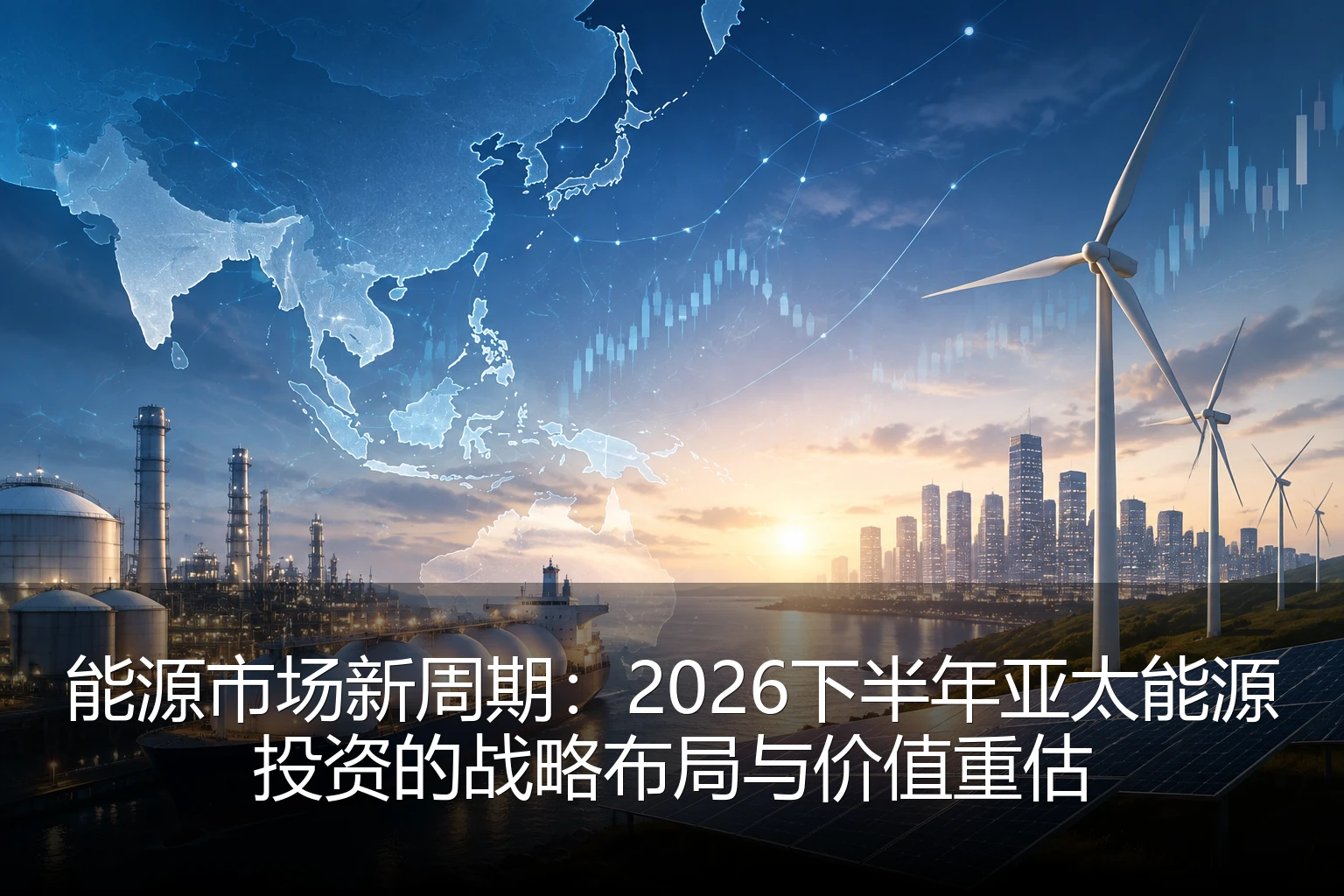
New Opportunities in the Energy Market: Core Advantages and Strategic Layout for Asia-Pacific Energy Investment in the Second Half of 2026
As the global energy transition accelerates, the Asia-Pacific region, serving as a global economic growth engine, is undergoing profound changes in its energy market. In the second half of 2026, the energy investment sector presents unprecedented opportunities and challenges. This article will deeply analyze the core advantages of energy investment based on current market trends, discuss industry prospects, and provide strategic layout suggestions for investors.
I. Global Energy Market Trend Analysis
In 2026, the global energy market, influenced by multiple factors, shows an upward trend amid volatility. International oil prices surpassed the $90 mark in August 2026, mainly driven by geopolitical tensions and demand recovery. Brent crude oil reached $91 on August 28, setting a new high for the year. Concurrently, LNG spot prices returned to the $12 level on August 24, indicating strong demand in the natural gas market. The Asia-Pacific region, as the world's largest energy consumer market, has its energy price fluctuations directly impacting the global market landscape.
From a supply and demand perspective, global crude oil supply still faces uncertainty. Geopolitical risks in the Middle East persist, and the security situation of the Strait of Hormuz, a critical shipping route, directly affects crude oil supply. Furthermore, the production policy adjustments by OPEC+ have significantly influenced the market. In terms of demand, the economic recovery in Asia is driving energy demand growth, with robust demand in the industrial and transportation sectors, particularly in countries like China and India. At the same time, the rapid development of new energy sources has partially replaced traditional fossil fuels, but it is not yet capable of fully meeting energy demand in the short term, leading to high traditional energy prices.
II. Core Advantages of Energy Investment in Asia-Pacific
The Asia-Pacific region possesses significant advantages in the field of energy investment, mainly demonstrated in the following aspects:
- Policy Dividend: Governments in various countries are introducing policies to support energy transformation, such as China's "14th Five-Year Plan" and India's renewable energy targets. These policies provide clear direction and incentives for energy investment, reducing investment risks.
- Demand Growth: The Asia-Pacific region has a large population and a rapidly developing economy, leading to continuously growing energy demand. Emerging market countries, in particular, are accelerating industrialization and urbanization, resulting in massive energy needs and providing a vast market space for energy investment.
- Technological Innovation: New energy technologies are continuously advancing, and costs are steadily decreasing. The improved efficiency and reduced costs of renewable energy sources like photovoltaics and wind power are increasing investment returns. Furthermore, breakthroughs in energy storage technology ensure the stable supply of renewable energy.
- Supply Chain Advantages: The Asia-Pacific region has a complete energy industry chain, from upstream resource development to downstream consumer markets, forming a powerful supply chain system. This provides favorable conditions for energy investment, lowering logistics and operational costs.
III. Balanced Development of New and Traditional Energy
In the context of energy transition, balanced development between new and traditional energy is key. On one hand, the rapid development of new energy provides new growth points for energy investment. Photovoltaic cell prices are approaching historical lows, capacity clearance is accelerating, and industry consolidation is entering a deep stage, offering opportunities for mergers and acquisitions and integration for investors. On the other hand, traditional energy sources such as natural gas and crude oil remain indispensable in the short term, especially in the power and transportation sectors. The activity in the LNG spot market and the expansion of midstream natural gas infrastructure provide stable income sources for investors.
Furthermore, the diversification of energy investment is also an important trend. Investors should pay attention to the synergies among sectors such as power, energy storage, and natural gas. For example, natural gas will still play an important role as a transitional energy source during the increase in renewable energy share. At the same time, the progress in energy storage technology supports the stable operation of power systems, becoming a new hotspot for energy investment.
III. Risks and Challenges
Although the prospects for energy investment are broad, there are still many risks and challenges. Geopolitical risks are a major source of uncertainty; for instance, instability in the Middle East could lead to sharp fluctuations in energy prices. In addition, energy price volatility, policy changes, and technological risks are key areas that investors need to pay attention to. For example, fluctuations in international oil prices directly affect the returns of traditional energy projects, while changes in subsidy policies for new energy projects can impact investment returns.
To cope with these risks, investors should adopt diversified investment strategies to spread risks. At the same time, they should strengthen market research and policy analysis to adjust their investment portfolios in a timely manner. Furthermore, paying attention to technological innovation and industry chain integration to enhance competitiveness is also crucial for addressing challenges.
IV. Strategic Layout Recommendations
Based on the above analysis, investors should adopt the following strategic layout in the second half of 2026:
* Focus on policy direction: Closely follow the energy policies of various countries and seize policy dividends. For example, the construction of the "new power system" in China and India's renewable energy goals are all important investment directions.
* Diversified investment: Balance investment between traditional and new energy to reduce single-market risks. At the same time, pay attention to the synergies among sectors such as power, energy storage, and natural gas.
* Technological innovation: Invest in new energy and energy storage technologies to enhance project competitiveness. For example, the improvement in the efficiency of photovoltaic cells and the reduction in energy storage costs will bring higher investment returns.
* Risk management: Strengthen market research and policy analysis to adjust investment portfolios in a timely manner. Use the futures market for hedging to reduce price volatility risks.
In conclusion, the Asian-Pacific energy market in the second half of 2026 is full of opportunities. Investors should seize the opportunities brought by policy dividends and demand growth while responding to risks cautiously to achieve sustainable investment returns.