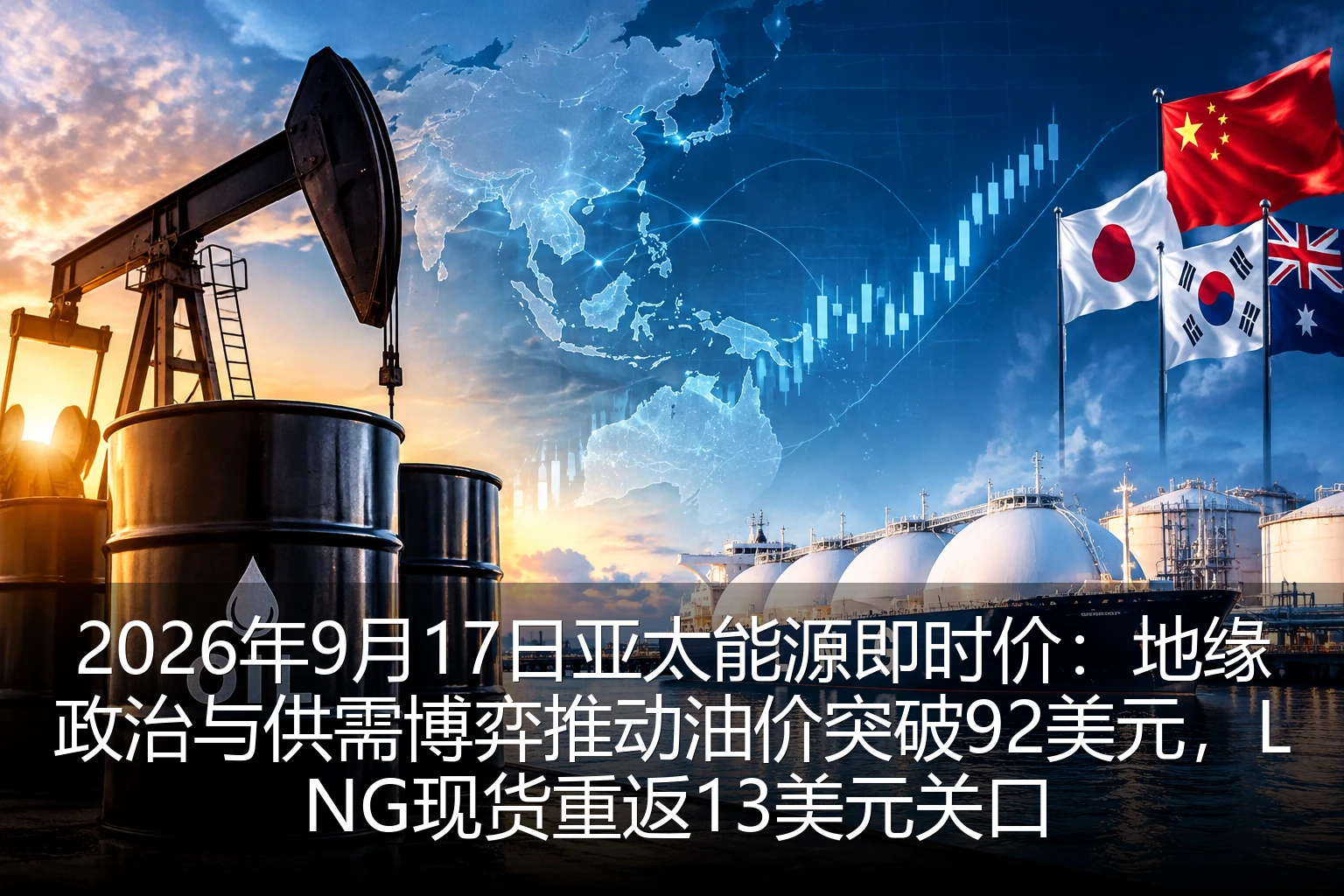
Asia-Pacific Energy Spot Prices on September 17, 2026: Geopolitical and Supply-Demand Dynamics Drive Oil Above $92, LNG Spot Rebounds to $13
On September 17, 2026, the Asia-Pacific energy market reached a critical turning point. International oil prices surpassed the $92 mark, driven by multiple factors, while liquefied natural gas (LNG) spot prices returned to the $13 level due to the recovery in Asian demand and supply adjustments. This volatility not only reflects the complex landscape of the current global energy market but also presents new strategic opportunities for investors. This article will deeply analyze market dynamics, explore the influence of geopolitical, supply-demand, and policy factors on energy prices, and look ahead at future trends.
International Oil Prices Exceed $92: Dual Drive from Geopolitics and Supply-Demand Imbalance
As of September 17, 2026, Brent crude oil prices were reported at $92.15/barrel, an increase of 1.8% from the previous trading day, setting a near three-month high. This rise was primarily driven by geopolitical tensions and supply-demand imbalance. The ongoing instability in the Middle East, with shipping safety in the Strait of Hormuz under threat, has heightened market concerns about crude oil supply. Concurrently, global crude oil inventories have decreased, particularly with U.S. inventories falling to a five-year low, further supporting the upward trend in oil prices.
From a supply and demand perspective, global crude oil demand continues to recover, with robust growth from Asian economies fueling demand increases. Crude oil imports from China and India reached record highs, while Europe's energy transition, although reducing fossil fuel dependence, still requires substantial crude oil in the short term to meet transitional needs. Furthermore, the strengthened execution of the OPEC+ production cut agreement, with major producing nations like Saudi Arabia and Russia further reducing output, has led to tight market supply.
Industry analysts point out that the oil price exceeding $92 signals the market entering a new upward cycle. Geopolitical risks remain the primary driver, while fundamental supply and demand provide long-term support. Investors must closely monitor developments in the Middle East and OPEC+ policy adjustments, as these factors could further push up oil prices.
LNG Spot Rebounds to $13: Asian Demand Recovery and Supply Adjustments
In the LNG market, Asian spot prices rebounded to $13/MMBtu on September 17, an increase of $0.5 from the previous week. This rebound was mainly attributed to the recovery in natural gas demand in the Asian region. Winter heating demand in countries such as China and Japan started ahead of schedule, while industrial gas demand in South Korea remained stable. Moreover, sufficient natural gas inventories in Europe reduced the need for LNG imports from Asia, allowing more supply to flow to the Asia-Pacific market.
On the supply side, global LNG capacity is gradually recovering. New LNG projects in the U.S. and Qatar are coming online sequentially, alleviating the tightness caused by previous supply disruptions. However, a temporary reduction in LNG exports from Australia due to equipment maintenance had some impact on the market. Overall, the balance between supply adjustments and demand recovery has led to the stabilization and rebound of LNG prices.
Experts believe that the LNG price returning to $13 is a sign of market normalization. As Asian winter demand continues to grow, prices may rise further, but improvements on the supply side will limit the increase. Investors should pay attention to weather changes in Asia and the progress of LNG projects, as these factors will influence future price trends.